
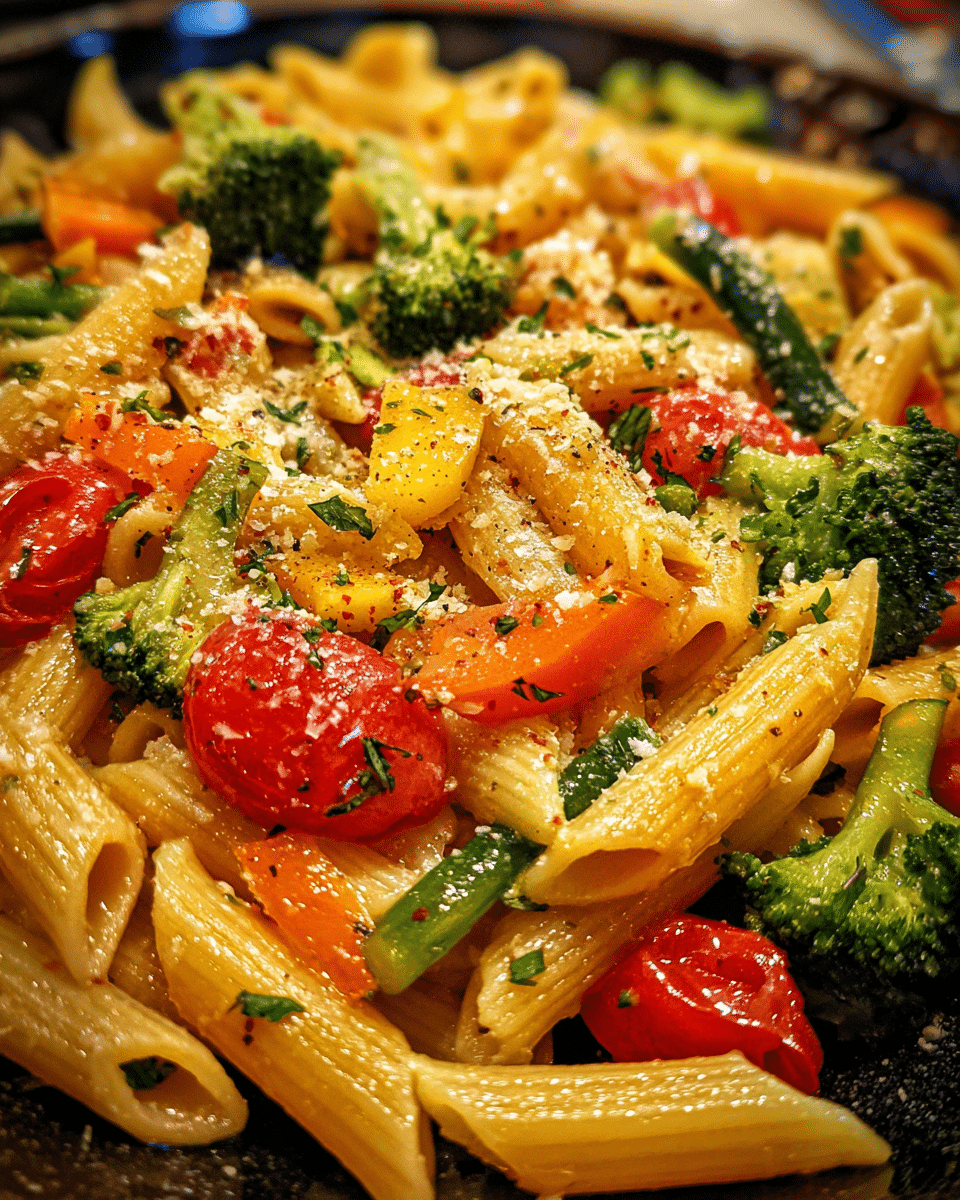
Are you tired of serving the same old pasta dishes that leave your family underwhelmed at the dinner table? Do you dream of creating colorful, nutritious meals that everyone will actually look forward to eating? This Veggie Pasta Primavera recipe is about to transform your weeknight dinner routine with vibrant flavors that will have even the pickiest eaters asking for seconds!
In this guide, you’ll discover how to create five different variations of pasta primavera that celebrate fresh seasonal vegetables while delivering restaurant-quality results. We’ll cover everything from selecting the perfect produce and pasta shapes to quick preparation techniques and family-friendly serving ideas.
Why This Veggie Pasta Primavera Recipe Works
- Uses affordable, in-season vegetables for maximum flavor and nutrition
- Comes together in just 30 minutes for busy weeknights
- Easily customizable for everyone’s preferences and dietary needs
- Creates minimal dishes with one-pan cooking options
- Provides balanced nutrition with vegetables, pasta, and light sauce
Choosing the Right Ingredients for Veggie Pasta Primavera
Best Vegetables for Pasta Primavera
The beauty of veggie pasta primavera lies in its flexibility. Traditional spring vegetables work beautifully, but you can adapt to any season:
- Spring classics: Asparagus, snap peas, baby zucchini, cherry tomatoes
- Summer bounty: Bell peppers, eggplant, summer squash, fresh corn
- Fall harvest: Butternut squash, Brussels sprouts, kale, mushrooms
- Year-round options: Broccoli, cauliflower, carrots, spinach
Pasta Selection Tips
The right pasta shape makes a difference in how the sauce and vegetables distribute:
- Farfalle (bow ties): Catches small vegetables in its crevices
- Penne or rigatoni: Perfect for chunky vegetable primavera
- Fusilli or rotini: Spiral shapes hold creamy sauces well
- Spaghetti or linguine: Classic choice for lighter primavera styles
Substitutions and Alternatives
- Whole grain or legume-based pastas boost fiber and protein
- Gluten-free options like rice, corn, or quinoa pasta work well
- Zucchini or sweet potato spirals for low-carb variations
- Fresh or frozen vegetables can be used depending on availability
Ingredients & Prep for Veggie Pasta Primavera
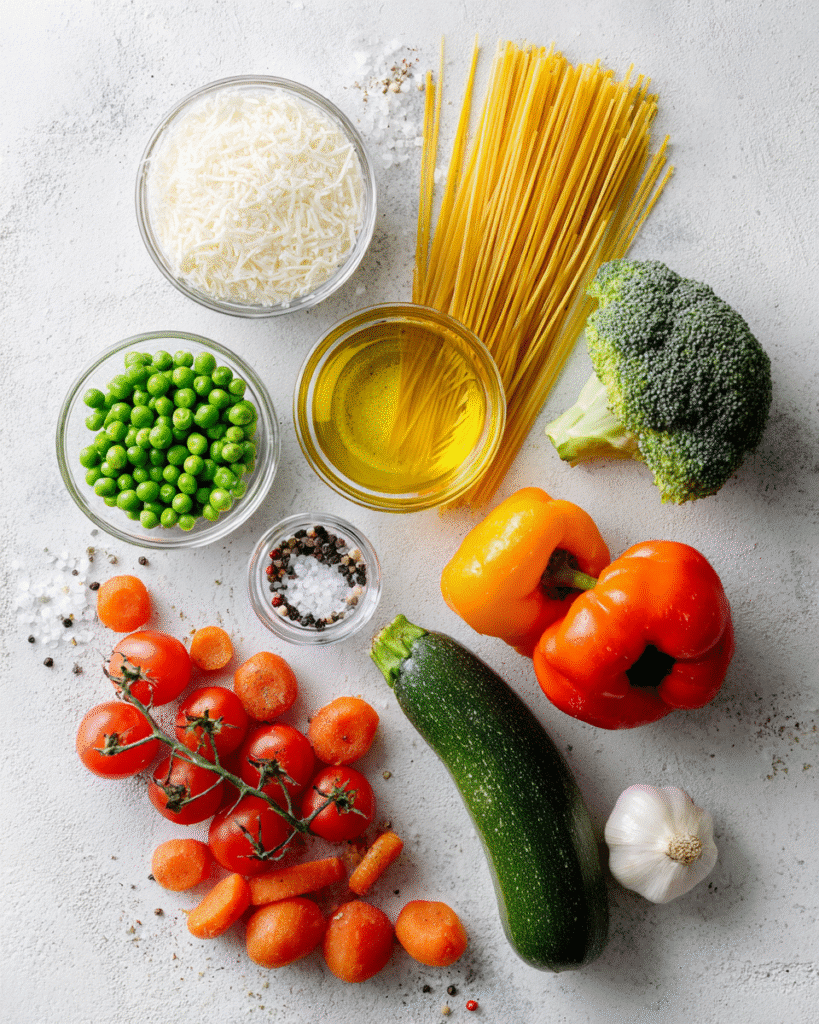
Veggie Pasta Primavera Base Ingredients
- 12 oz pasta of choice
- 4-5 cups mixed seasonal vegetables, cut into bite-sized pieces
- 3 cloves garlic, minced
- 1 small onion, thinly sliced
- 2 tbsp olive oil
- ¼ cup vegetable broth
- ¼ cup grated Parmesan cheese (optional)
- Fresh herbs (basil, parsley, or chives)
- Salt and pepper to taste
Preparation Essentials for Veggie Pasta Primavera
Proper vegetable prep ensures even cooking and maximum flavor:
- Wash and dry all produce thoroughly
- Cut vegetables to similar sizes for consistent cooking
- Blanch harder vegetables like broccoli or carrots before adding to the pasta
- Toast garlic and herbs in olive oil to release aromatics
Quick Sauce Options
- Light cream sauce: ½ cup half-and-half with Parmesan
- Lemon-herb: Olive oil, lemon zest, lemon juice, fresh herbs
- Garlic butter: Melted butter with roasted garlic and herbs
- Pesto: Traditional basil or sun-dried tomato variations
Step-by-Step Veggie Pasta Primavera Cooking Instructions
Pre-Cooking Veggie Pasta Primavera Prep
- Bring a large pot of salted water to boil for pasta
- Prepare all vegetables (chop, slice, dice as needed)
- Gather and measure remaining ingredients
- Heat olive oil in a large skillet over medium heat
Cooking Method for Perfect Veggie Pasta Primavera
- Cook pasta according to package directions until al dente
- Meanwhile, sauté onions in olive oil for 2-3 minutes until translucent
- Add garlic and cook for 30 seconds until fragrant
- Add vegetables in order of cooking time (harder vegetables first)
- Cook until vegetables are tender-crisp, about 5-7 minutes
- Add vegetable broth and simmer for 2 minutes
- Drain pasta, reserving ½ cup pasta water
- Toss pasta with vegetable mixture and add pasta water as needed for desired consistency
- Finish with cheese, fresh herbs, salt and pepper
Doneness Check for Veggie Pasta Primavera
- Pasta should be al dente – firm to the bite but not hard
- Vegetables should be vibrant in color and tender-crisp
- Sauce should lightly coat pasta without being soupy or dry
Serving Your Veggie Pasta Primavera
- Transfer to a large serving bowl or individual plates
- Finish with extra fresh herbs and a drizzle of olive oil
- Serve immediately while hot
Pro Tips for Perfect Veggie Pasta Primavera
Avoiding Common Veggie Pasta Primavera Mistakes
- Don’t overcook pasta – keep it al dente as it will continue cooking slightly when combined with hot vegetables
- Avoid overcrowding the pan when sautéing vegetables to prevent steaming
- Season throughout the cooking process, not just at the end
- Add delicate vegetables (like tomatoes or spinach) at the very end to maintain texture
Need more recipe inspiration? Check out our collection of family-friendly recipes that make healthy eating a breeze!
Tool Recommendations for Veggie Pasta Primavera
- Large, wide skillet or sauté pan with high sides
- Sharp chef’s knife for efficient vegetable prep
- Microplane for zesting citrus
- Pasta serving tongs for easy mixing and serving
Storage & Reheating Veggie Pasta Primavera
- Refrigerate leftovers in airtight containers for up to 3 days
- Add a splash of broth or water when reheating to revive the sauce
- Cold pasta primavera makes excellent pasta salad for lunch the next day
Veggie Pasta Primavera Flavor Variations
Fresh Spring Veggie Pasta Primavera
- Focus on tender spring vegetables: asparagus, peas, artichokes
- Add lemon zest and juice for brightness
- Finish with fresh mint and parsley
Mediterranean Veggie Pasta Primavera
- Feature zucchini, cherry tomatoes, bell peppers, and olives
- Add crumbled feta cheese instead of Parmesan
- Incorporate oregano and a splash of balsamic vinegar
Asian-Inspired Veggie Pasta Primavera
- Use snow peas, carrots, bell peppers, and mushrooms
- Swap traditional sauce for a light soy-ginger sauce
- Garnish with sesame seeds and green onions
Roasted Veggie Pasta Primavera
- Roast vegetables (cauliflower, Brussels sprouts, carrots) until caramelized
- Toss with pasta, olive oil, and herbs
- Add toasted pine nuts for crunch
Creamy Veggie Pasta Primavera
- Create a light cream sauce with half-and-half or cashew cream
- Add nutritional yeast for cheesy flavor without dairy
- Incorporate spinach or kale for added nutrients
| Veggie Pasta Variation | Key Vegetables | Sauce Base | Herb/Spice Flavor Profile |
|---|---|---|---|
| Spring Primavera | Asparagus, peas, artichokes | Lemon-olive oil | Mint, parsley, chives |
| Mediterranean | Zucchini, tomatoes, peppers | Olive oil-balsamic | Oregano, basil, thyme |
| Asian-Inspired | Snow peas, carrots, mushrooms | Soy-ginger | Cilantro, ginger, garlic |
| Roasted Vegetable | Cauliflower, Brussels sprouts | Olive oil-garlic | Rosemary, thyme, sage |
| Creamy | Spinach, broccoli, corn | Cream or cashew | Dill, chives, nutmeg |
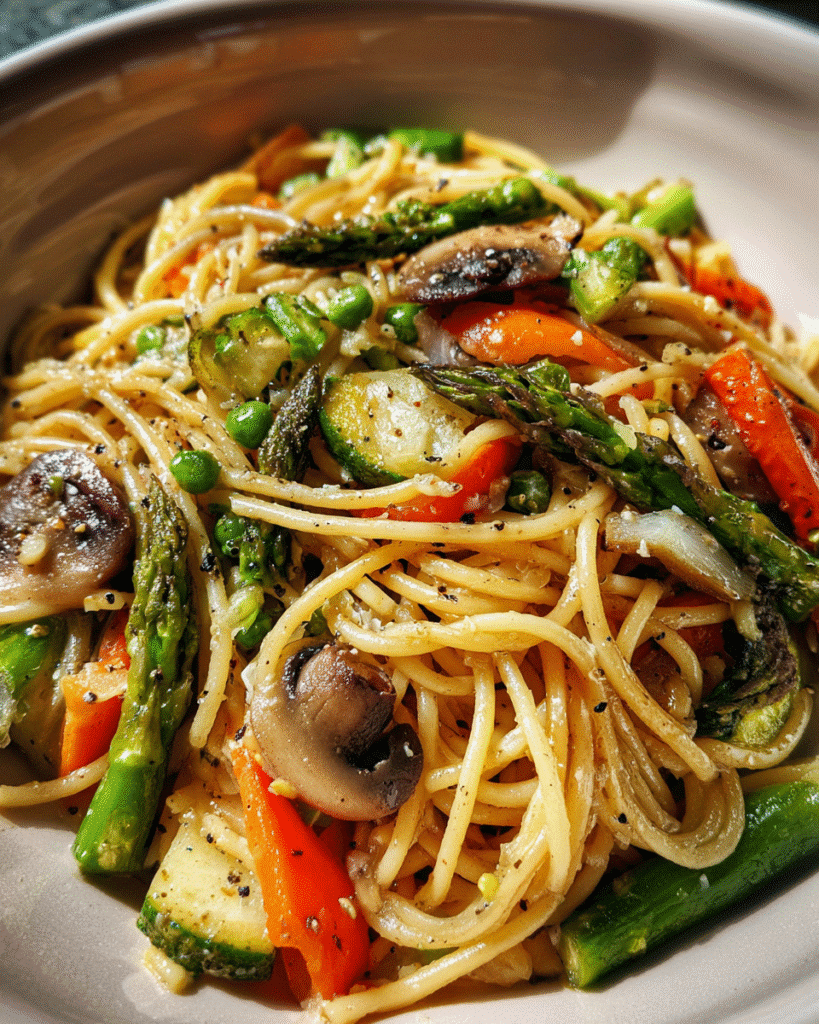
Serving Suggestions for Veggie Pasta Primavera
- Pair with a simple green salad with light vinaigrette
- Serve with garlic bread or rosemary focaccia
- Add protein options on the side: grilled tofu, chickpeas, or white beans
- Complement with a crisp white wine like Pinot Grigio or Sauvignon Blanc (for adults)
Looking for more veggie-forward recipes? Try our Crispy Spicy Buffalo Cauliflower Bites Recipe for a crowd-pleasing appetizer!
Veggie Pasta Primavera FAQs
Can I make veggie pasta primavera ahead of time?
Yes! Prepare the vegetables and sauce up to a day ahead, then cook the pasta fresh and combine everything just before serving for the best texture.
How do I keep my vegetables from getting soggy?
Cook vegetables quickly at high heat and don’t overcook them. They should remain slightly crisp and vibrant in color.
Is veggie pasta primavera healthy?
Absolutely! This dish is loaded with vegetables, uses moderate amounts of pasta, and typically contains less oil and cheese than many other pasta dishes.
Can I use frozen vegetables for pasta primavera?
Yes, though fresh vegetables provide the best texture. If using frozen, thaw completely and pat dry before cooking to prevent excess moisture.
How can I make this dish more filling?
Add protein sources like cannellini beans, chickpeas, or edamame. Our Chickpea Curry is another great protein-packed vegetarian option!
Conclusion
Veggie pasta primavera is the perfect solution for busy families looking to eat healthier without sacrificing flavor or spending hours in the kitchen. With these five versatile variations, you’ll never get bored with this colorful dish that celebrates seasonal produce.
Ready to get creative in your kitchen? Gather your favorite veggies, boil some pasta, and watch your family’s faces light up when you present them with a beautiful plate of pasta primavera tonight! For more family-friendly veggie inspiration, don’t forget to check out our Pinterest board where we share weekly meal planning ideas that make healthy cooking a breeze.
Share your own veggie pasta primavera creations with us in the comments below – we’d love to hear which variation became your family’s favorite!