

Vegetable beef soup has been my comfort food salvation during those long winter evenings when nothing else seems to chase away the chill. Hi! I’m Emily, the creator behind Bikren Cook, and I’ve spent years perfecting these hearty, soul-warming recipes that bring both nourishment and joy to the table.
After countless test batches and family feedback sessions, I’ve narrowed down five vegetable beef soup variations that consistently deliver that perfect balance of rich broth, tender beef, and garden-fresh vegetables. These aren’t just recipes—they’re invitations to create moments of connection around your table, bringing comfort and satisfaction with every spoonful.
In this guide, I’ll share my secrets for selecting the best cuts of beef for soup, time-saving prep techniques, and flavor-boosting ingredients that transform ordinary soup into extraordinary meals. Whether you’re a beginner cook or seasoned home chef, you’ll find actionable tips to elevate your soup game and create memories that last long after the bowls are empty.
Why These Vegetable Beef Soup Recipes Work
These vegetable beef soup recipes stand out from ordinary versions because they’re designed with both flavor and practicality in mind:
- Uses economical beef cuts that become incredibly tender through slow cooking
- Comes together in one pot for simple cleanup and concentrated flavors
- Creates leftovers that taste even better the next day
- Features flexible vegetable options based on seasonal availability
- Freezes beautifully for meal prep convenience
Choosing the Right Beef for Vegetable Beef Soup
Best Cuts for Vegetable Beef Soup
For truly exceptional vegetable beef soup, selecting the right cut makes all the difference. Chuck roast shines as the star choice—its generous marbling melts during cooking, creating a rich, flavorful broth while the meat becomes fork-tender. Bottom round and beef stew meat also work wonderfully, offering good flavor and texture without breaking the budget.
Buying Tips for Soup Beef
When shopping for beef for your vegetable soup:
- Look for meat with visible marbling (tiny white flecks of fat throughout)
- Choose pieces with deep, rich color
- Request that your butcher cut stew-sized cubes (1-inch pieces work best)
- Buy slightly more than the recipe calls for, as meat shrinks during cooking
Beef Substitutions for Soup
If traditional beef cuts aren’t available:
- Ground beef makes a quick-cooking alternative (brown and drain before adding)
- Beef shank offers incredible richness (requires longer cooking)
- Boneless short ribs provide exceptional flavor (though at a higher price point)
Vegetable Beef Soup Ingredients & Prep
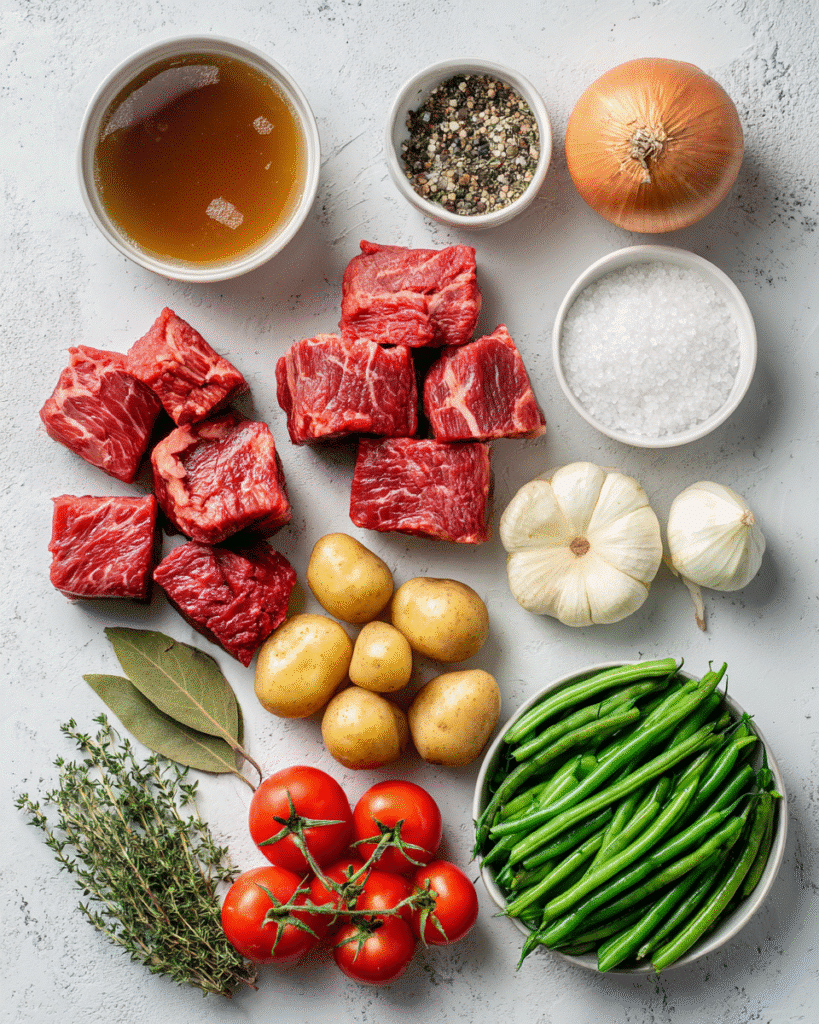
Beef Prep Essentials for Soup
Before your beef hits the pot:
- Pat meat completely dry with paper towels to ensure proper browning
- Allow meat to come to room temperature for 20-30 minutes
- Season generously with salt and pepper before browning
- Work in batches when browning to avoid overcrowding (which causes steaming instead of searing)
Flavor Bases for Vegetable Beef Soup
Classic Mirepoix
- 2 carrots, diced
- 2 celery stalks, diced
- 1 large onion, diced
- 3 cloves garlic, minced
- 2 tablespoons tomato paste
Herbs & Seasonings
- 2 bay leaves
- 1 tablespoon fresh thyme
- 1 teaspoon dried oregano
- 2 tablespoons Worcestershire sauce
- 1 tablespoon better-than-bouillon beef base
Pantry Staples for the Perfect Broth
The foundation of excellent vegetable beef soup relies on these essentials:
- Low-sodium beef broth (allows better control of salt level)
- Canned fire-roasted tomatoes (for depth of flavor)
- Tomato paste (for richness and color)
- Bay leaves (for subtle aromatic notes)
- Worcestershire sauce (for umami enhancement)
Step-by-Step Vegetable Beef Soup Cooking Instructions
Pre-Cooking Beef Prep for Vegetable Soup
- Cut beef into 1-inch cubes if not already done
- Pat meat dry thoroughly with paper towels
- Season generously with salt and freshly ground black pepper
- Heat 2 tablespoons olive oil in a Dutch oven or heavy-bottomed pot over medium-high heat
Vegetable Beef Soup Cooking Method
- Brown beef in batches (about 3-4 minutes per batch), then remove and set aside
- In the same pot, add onions, carrots, and celery, cooking until softened (5-7 minutes)
- Add garlic and tomato paste, stirring constantly for 1 minute
- Pour in 1/2 cup broth, scraping up browned bits from the bottom of pot
- Return beef to pot, add remaining broth, tomatoes, herbs, and Worcestershire sauce
- Bring to a boil, then reduce to a simmer and cover
- Cook for 1.5-2 hours until beef is tender
- Add potatoes and additional vegetables, simmer for 20-25 minutes more
Vegetable Beef Soup Doneness Check
Your soup is perfectly cooked when:
- Beef pieces easily break apart with light pressure from a fork
- Vegetables are tender but not mushy
- Broth has slightly thickened and developed a deep color
Resting Your Vegetable Beef Soup
Allow your soup to rest for 15-20 minutes before serving. This resting period allows:
- Flavors to fully meld together
- Temperature to cool to a comfortable eating level
- Broth to slightly thicken as it sits
Looking for another comforting recipe? Check out my Classic Ginger Garlic Chicken Noodle Soup for more soul-warming goodness!
Pro Tips for Perfect Vegetable Beef Soup
Avoiding Common Vegetable Beef Soup Mistakes
- Never boil the soup after adding the beef back in (simmer only)
- Cut all vegetables to similar sizes for even cooking
- Don’t add tender vegetables (like peas or green beans) until the final 10 minutes
- Always taste and adjust seasoning before serving
Tool Recommendations for Soup Success
- Dutch oven or heavy-bottomed pot for even heat distribution
- Wooden spoon for stirring without scratching your pot
- Sharp chef’s knife for uniform vegetable cutting
- Measuring cups and spoons for consistent results
Storage & Reheating Vegetable Beef Soup
- Refrigerate cooled soup in airtight containers for up to 4 days
- For freezing, leave 1-inch headspace in containers (soup expands when frozen)
- Freeze individual portions for up to 3 months
- Thaw overnight in refrigerator before gently reheating on stovetop
For more delicious one-pot meal ideas, discover my Savory One-Pan Chicken recipe that’s perfect for busy weeknights!
Vegetable Beef Soup Flavor Variations
Hearty & Rustic Vegetable Beef Soup
Add diced rutabaga, turnips, and parsnips along with traditional vegetables for a farm-fresh twist that adds earthy depth.
Tomato-Forward Vegetable Beef Soup
Double the tomatoes and add 2 tablespoons of tomato paste for a brighter, more acidic profile that pairs beautifully with crusty bread.
Garden Vegetable Beef Soup
Load up on seasonal vegetables—whatever looks freshest at your market—for a soup that celebrates the bounty of your garden or farmer’s market.
| Soup Variation | Key Ingredients | Cooking Time | Best Served With |
|---|---|---|---|
| Classic Vegetable Beef | Chuck roast, carrots, potatoes, peas | 2-2.5 hours | Crusty bread |
| Italian-Style | Beef, zucchini, spinach, Italian herbs, parmesan | 2 hours | Garlic bread |
| Barley Vegetable Beef | Beef chuck, pearl barley, root vegetables | 2.5 hours | Hearty grain bread |
| Spicy Southwest | Beef, corn, black beans, tomatoes, chili powder | 2 hours | Cornbread |
| Asian-Inspired | Beef, bok choy, mushrooms, ginger, star anise | 2 hours | Rice |
Global Vegetable Beef Soup Flavors
- Italian-Style: Add 1 teaspoon Italian seasoning, 1/2 cup red wine, and finish with fresh basil and grated Parmesan
- Mexican-Inspired: Incorporate 1 tablespoon chili powder, 1 teaspoon cumin, corn kernels, and black beans
- French Onion Beef: Increase onions to 3, caramelize thoroughly, add beef and broth, then serve with melted Gruyère toast
Serving Vegetable Beef Soup Suggestions
Perfect accompaniments to elevate your vegetable beef soup experience:
- Crusty artisan bread or warm dinner rolls for dipping
- Fresh green salad with vinaigrette for brightness and contrast
- Grilled cheese sandwiches for heartier appetites
- Garnish with fresh herbs (parsley, thyme) or a dollop of sour cream
For your next dinner, try pairing this soup with my Chicken and Mushroom Skillet for an impressive meal combination!
Find more inspiration for your kitchen adventures on my Pinterest board where I share my favorite seasonal recipes and cooking tips!
Vegetable Beef Soup FAQs
Can I make vegetable beef soup in a slow cooker?
Absolutely! Brown the beef and sauté the aromatic vegetables on the stovetop first, then transfer everything to your slow cooker. Cook on low for 7-8 hours or high for 4-5 hours, adding potatoes and tender vegetables during the final 1-2 hours.
My vegetable beef soup seems bland. How can I enhance the flavor?
Try adding a tablespoon of Worcestershire sauce, a splash of balsamic vinegar, or more salt. A parmesan rind simmered in the broth adds incredible depth, and fresh herbs stirred in at the end brighten everything up.
Can I use frozen vegetables in my beef soup?
Yes! Frozen vegetables work perfectly in soups. Add them during the last 15 minutes of cooking since they’re already partially cooked.
How do I thicken my vegetable beef soup?
For a thicker soup, you can: 1) Puree a cup of the cooked vegetables and broth, then stir back in, 2) Add a slurry of 1 tablespoon cornstarch mixed with 2 tablespoons cold water, or 3) Simmer uncovered for 15-20 minutes to reduce the liquid.
Wrapping Up Your Vegetable Beef Soup Journey
These five vegetable beef soup recipes offer endless possibilities for creating comforting meals that satisfy and nourish. From the classic version that reminds you of grandma’s kitchen to global variations that expand your culinary horizons, there’s a vegetable beef soup here for every taste preference and occasion.
I encourage you to make these recipes your own—swap vegetables based on what’s in season, adjust seasonings to your family’s taste, and don’t be afraid to experiment with new ingredients. The beauty of soup is its forgiving nature and ability to transform humble ingredients into something truly special.
Share your soup creations with me on social media or leave a comment below about your favorite variation. Nothing makes me happier than knowing these recipes are bringing warmth and comfort to your table, just as they have to mine for years.
Happy cooking and even happier eating!