
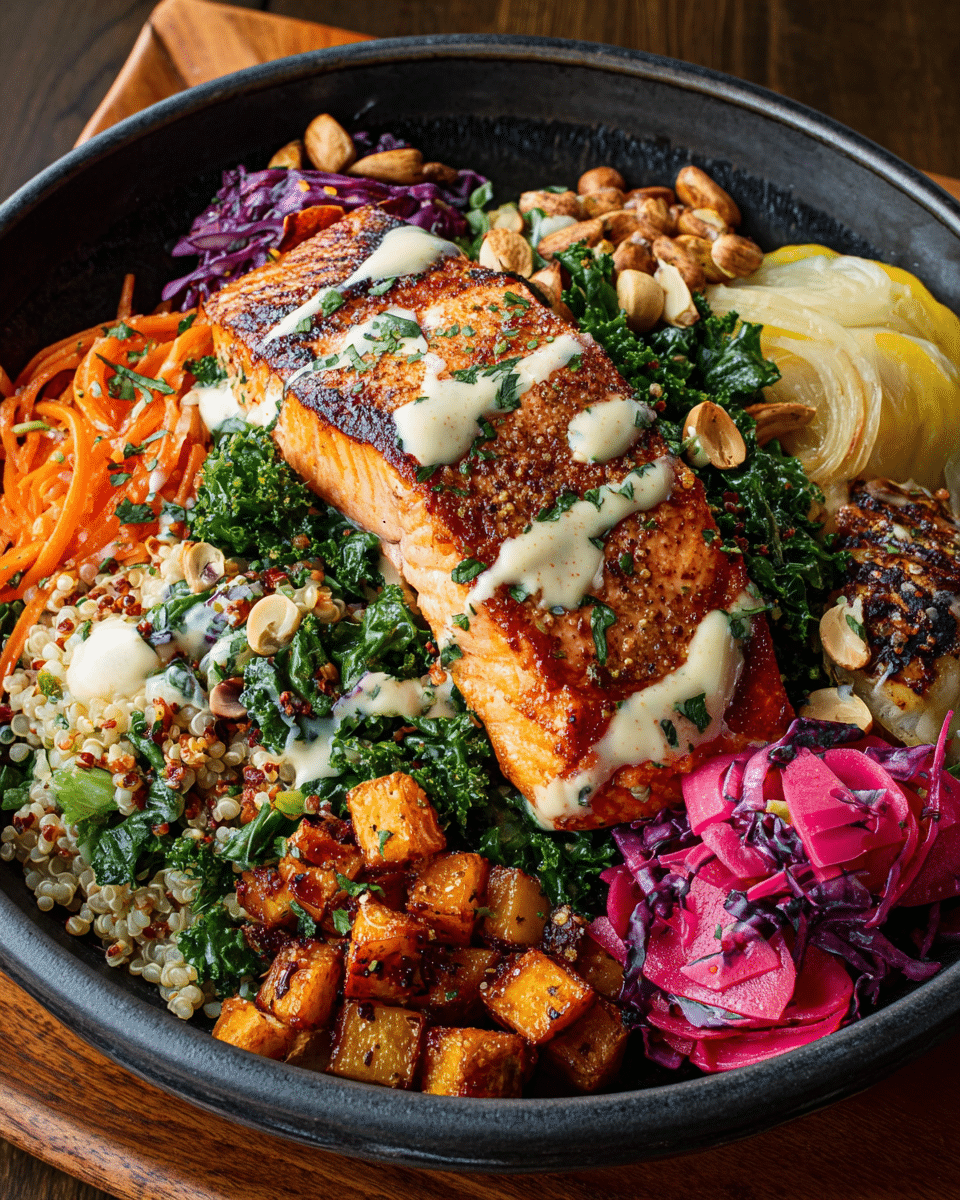
Are you tired of bland, uninspiring weeknight meals that leave you unsatisfied? Do you find yourself falling into a dinner rut, making the same recipes over and over? A vibrant, nutritious Salmon Buddha Bowl might be exactly what your dinner routine needs. This balanced, customizable meal combines protein-rich salmon, colorful vegetables, and satisfying grains into one beautiful bowl that’s as nutritious as it is delicious. In this guide, we’ll explore how to create the perfect Salmon Buddha Bowl, from selecting the freshest ingredients to assembling a restaurant-worthy meal at home. We’ll cover flavor combinations, meal prep strategies, and creative variations to keep your weeknight dinners exciting and nourishing.
Why This Salmon Buddha Bowl Recipe Works
- Uses affordable, nutrient-dense ingredients that are widely available
- Comes together in under 30 minutes for busy weeknights
- Offers complete nutrition in a single bowl (protein, healthy fats, complex carbs)
- Adaptable to seasonal produce and what you have on hand
- Perfect for meal prep—components can be prepared ahead of time
- Visually stunning for an impressive yet effortless dinner option
Choosing the Right Salmon for Your Buddha Bowl
Best Cuts for Salmon Buddha Bowls
Wild-caught salmon offers superior flavor and nutritional value, though farm-raised works well too. Look for center-cut salmon fillets that are about 1-inch thick for even cooking. Sockeye salmon provides vibrant color and rich flavor, while king salmon offers buttery texture. Coho salmon strikes a nice balance between flavor and affordability.
Buying Tips for Perfect Salmon
When shopping for salmon, look for firm flesh with bright color and minimal “gaping” (separation between the muscle fibers). Fresh salmon should have a mild, clean scent—never fishy. The skin should be shiny and intact. If budget is a concern, frozen wild salmon is often more affordable than fresh and works beautifully in Buddha bowls.
Substitutions for Salmon Buddha Bowls
If salmon isn’t available, try other protein options like seared tuna, shrimp, or even toasted tofu for a plant-based alternative. Smoked salmon can be used for a no-cook version, while canned salmon makes for an ultra-convenient budget option.
Ingredients & Prep for Salmon Buddha Bowls
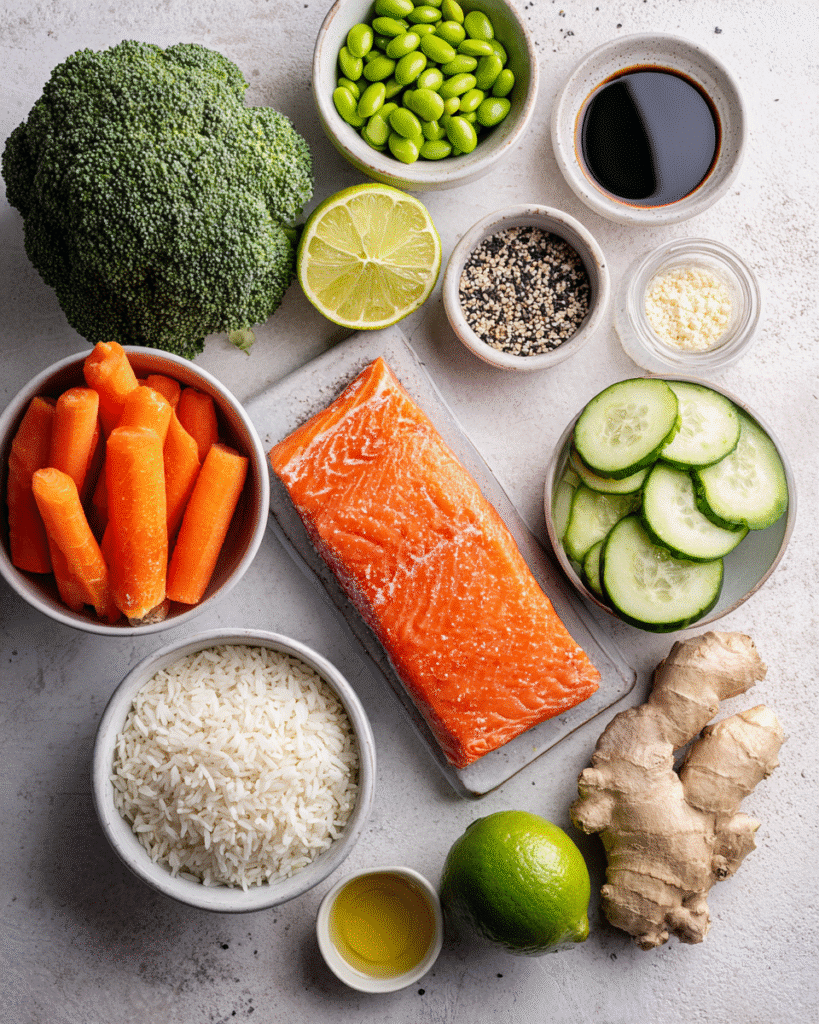
Salmon Prep Essentials
Before cooking, pat salmon fillets dry with paper towels to ensure proper searing. Remove pin bones using tweezers or needle-nose pliers. For the best flavor, season salmon with salt 15-30 minutes before cooking to enhance moisture retention. If using skin-on salmon, score the skin lightly to prevent curling during cooking.
Marinades for Salmon Buddha Bowls
- Miso-ginger: 2 tbsp white miso paste + 1 tbsp grated ginger + 2 tsp honey + 1 tbsp rice vinegar (20-minute marinate)
- Teriyaki: 3 tbsp soy sauce + 2 tbsp mirin + 1 tbsp honey + 1 tsp grated garlic (15-minute marinate)
- Citrus-herb: 2 tbsp olive oil + zest and juice of 1 lemon + 2 tsp fresh thyme + 1 clove minced garlic (15-minute marinate)
- Maple-dijon: 1 tbsp dijon mustard + 1 tbsp maple syrup + 1 tsp soy sauce + pinch of black pepper (10-minute marinate)
Buddha Bowl Base Components
- Grains: Brown rice, quinoa, farro, or cauliflower rice for low-carb option
- Vegetables: Edamame, cucumber, avocado, shredded carrots, radishes, bell peppers
- Greens: Baby spinach, mixed greens, arugula, or thinly sliced kale
- Toppings: Sesame seeds, green onions, microgreens, seaweed strips, pickled ginger
Step-by-Step Salmon Buddha Bowl Cooking Instructions
Pre-Cooking Salmon Prep
- Remove salmon from refrigerator 15 minutes before cooking to take the chill off
- Pat salmon dry thoroughly with paper towels
- Season generously with salt and pepper, or apply your chosen marinade
- Prepare all vegetables and grains while salmon comes to temperature
Cooking Method for Salmon Buddha Bowls
- Heat a non-stick or cast-iron skillet over medium-high heat with 1 tablespoon oil
- Place salmon skin-side down (if using skin-on) and cook for 4-5 minutes until skin is crispy
- Gently flip and cook for an additional 2-3 minutes for medium doneness
- Alternatively, roast salmon in a 400°F oven for 10-12 minutes for a hands-off approach
Doneness Check for Salmon
For perfectly cooked salmon, look for these signs:
- Internal temperature of 125°F for medium-rare, 130°F for medium
- Flesh should be opaque but still slightly translucent in the center
- Salmon should flake easily with a fork but remain moist
Resting Your Salmon
Allow salmon to rest for 3-5 minutes after cooking to redistribute juices and complete carryover cooking. This ensures your salmon remains moist when served in your Buddha bowl.
Looking for more salmon inspiration? Check out our extensive collection of seafood recipes at Recipes Foody for ideas that will elevate your weeknight cooking.
Pro Tips for Perfect Salmon Buddha Bowls
Avoiding Dry Salmon
- Don’t overcook! Salmon continues cooking after being removed from heat
- Cook skin-side down for most of the cooking time to protect the delicate flesh
- Consider using a quick cure (1 part sugar, 2 parts salt) for 20 minutes before cooking to maintain moisture
- Brush with olive oil or butter before cooking to lock in moisture
Tool Recommendations for Salmon Buddha Bowls
- Instant-read thermometer for perfect doneness
- Fish spatula for gentle flipping
- Shallow, wide bowls for attractive presentation
- Mandoline for paper-thin vegetable slices
Storage & Reheating Salmon Buddha Bowls
Store components separately for meal prep, keeping salmon in an airtight container for up to 3 days. For reheating, gently warm salmon at a low temperature (275°F oven or low power in microwave) just until heated through to avoid drying. Consider enjoying leftover salmon cold to maintain texture and flavor.
For beautiful food inspiration and more Buddha bowl ideas, follow us on Pinterest where we share stunning food photography and creative meal ideas every week!
Flavor Variations for Salmon Buddha Bowls
Asian-Inspired Salmon Buddha Bowls
Marinate salmon in a mixture of soy sauce, sesame oil, and ginger. Serve over brown rice with edamame, avocado, cucumber, and carrots. Top with a drizzle of sriracha mayo and furikake seasoning for an umami-rich bowl that’s bursting with flavor.
Mediterranean Salmon Buddha Bowl
Season salmon with lemon, garlic, and herbs like dill and oregano. Pair with quinoa, cucumber, cherry tomatoes, red onion, and kalamata olives. Finish with a dollop of tzatziki sauce and a sprinkle of feta cheese for a refreshing Mediterranean-inspired meal.
Southwestern Salmon Buddha Bowl
Rub salmon with cumin, chili powder, and lime zest before cooking. Serve over cilantro-lime rice with black beans, corn, avocado, and cherry tomatoes. Top with a spoonful of salsa and a squeeze of lime for a zesty twist on the traditional Buddha bowl.
| Buddha Bowl Style | Grain Base | Key Vegetables | Sauce/Dressing | Toppings |
|---|---|---|---|---|
| Asian | Brown rice | Edamame, cucumber, carrots | Sriracha mayo | Sesame seeds, nori |
| Mediterranean | Quinoa | Cucumber, tomato, olives | Tzatziki | Feta cheese, fresh herbs |
| Southwestern | Cilantro-lime rice | Black beans, corn, avocado | Lime-cilantro vinaigrette | Pico de gallo, lime wedges |
| Nordic | Barley | Pickled beets, cucumber | Dill yogurt sauce | Fresh dill, capers |
| Tropical | Coconut rice | Mango, red bell pepper | Coconut-lime dressing | Macadamia nuts, cilantro |
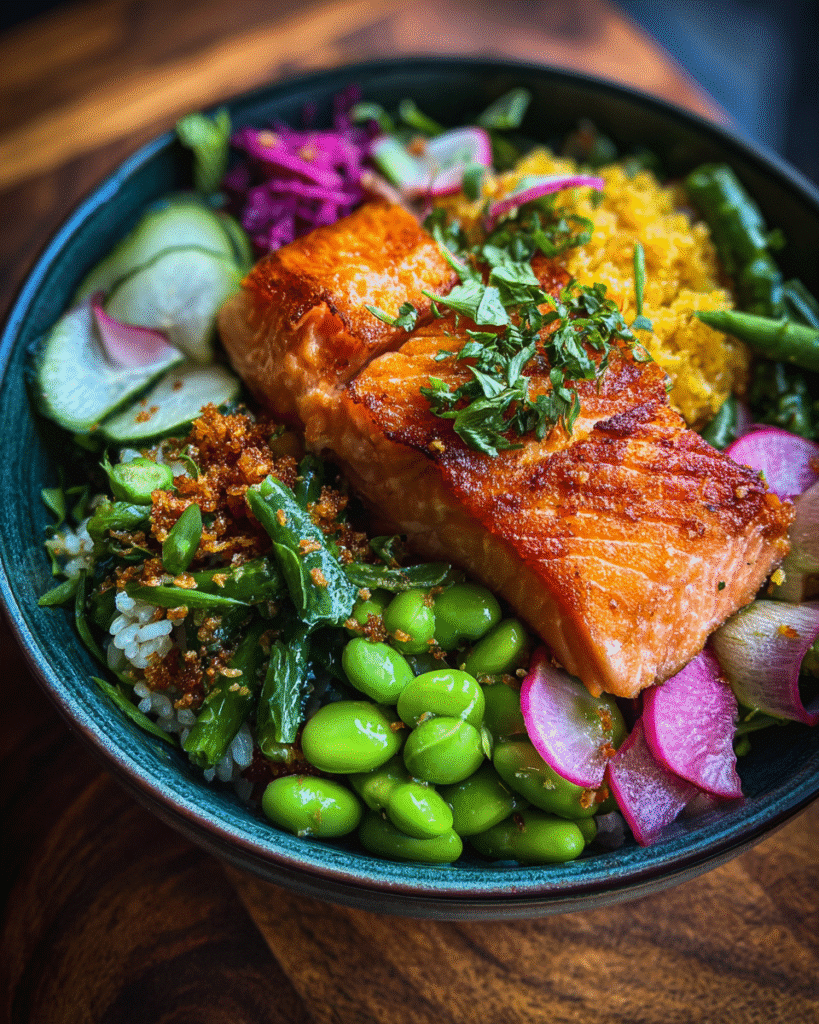
Serving Suggestions for Salmon Buddha Bowls
Create a visually stunning Buddha bowl by arranging components in sections around the bowl rather than mixing. Place salmon as the centerpiece, with grains, vegetables, and garnishes thoughtfully arranged around it. For a complete meal experience, consider serving with:
- A crisp Sauvignon Blanc or light Pinot Noir if enjoying in the evening
- Sparkling water with cucumber and mint for a refreshing non-alcoholic pairing
- A side of miso soup for an Asian-inspired bowl
- Additional sauce options on the side to adjust flavors as desired
For maximum enjoyment, serve Buddha bowls at room temperature rather than piping hot, allowing the flavors to meld together perfectly.
FAQs About Salmon Buddha Bowls
Can I prepare Salmon Buddha Bowls in advance?
Yes! Cook the salmon and prepare all components up to 3 days ahead. Store everything separately in airtight containers and assemble just before eating. For best results, bring salmon to room temperature before serving.
How do I make a Salmon Buddha Bowl if I don’t like raw vegetables?
You can quickly blanch or roast vegetables instead. Try roasted broccoli, bell peppers, or sweet potatoes for a warm Buddha bowl variation that’s perfect for cooler months.
Are Salmon Buddha Bowls suitable for meal prep?
Absolutely! They’re ideal for meal prep—just store components separately and assemble before eating. Cook a larger batch of salmon and grains on Sunday for quick assembly throughout the week.
What’s the best way to transport a Salmon Buddha Bowl for lunch?
Use a divided container to keep components separate until ready to eat. Pack sauces and dressings in small containers on the side to prevent sogginess. For best results, place heavier items at the bottom and delicate items on top.
Conclusion
Transform your weeknight dinner routine with these vibrant, nutritious Salmon Buddha Bowls. They offer the perfect balance of convenience and culinary excitement—simple enough for busy evenings yet impressive enough for entertaining. With endless customization options, you’ll never grow tired of this versatile meal format.
The beauty of Salmon Buddha Bowls lies in their adaptability to your preferences, dietary needs, and what’s available in your pantry. Start with our basic formula and then let your creativity shine! Share your Salmon Buddha Bowl creations on social media and tag us—we love seeing how you make this recipe your own.
Ready to expand your weeknight dinner repertoire? Explore our other quick and nutritious meals at Recipes Foody and discover your next family favorite!