
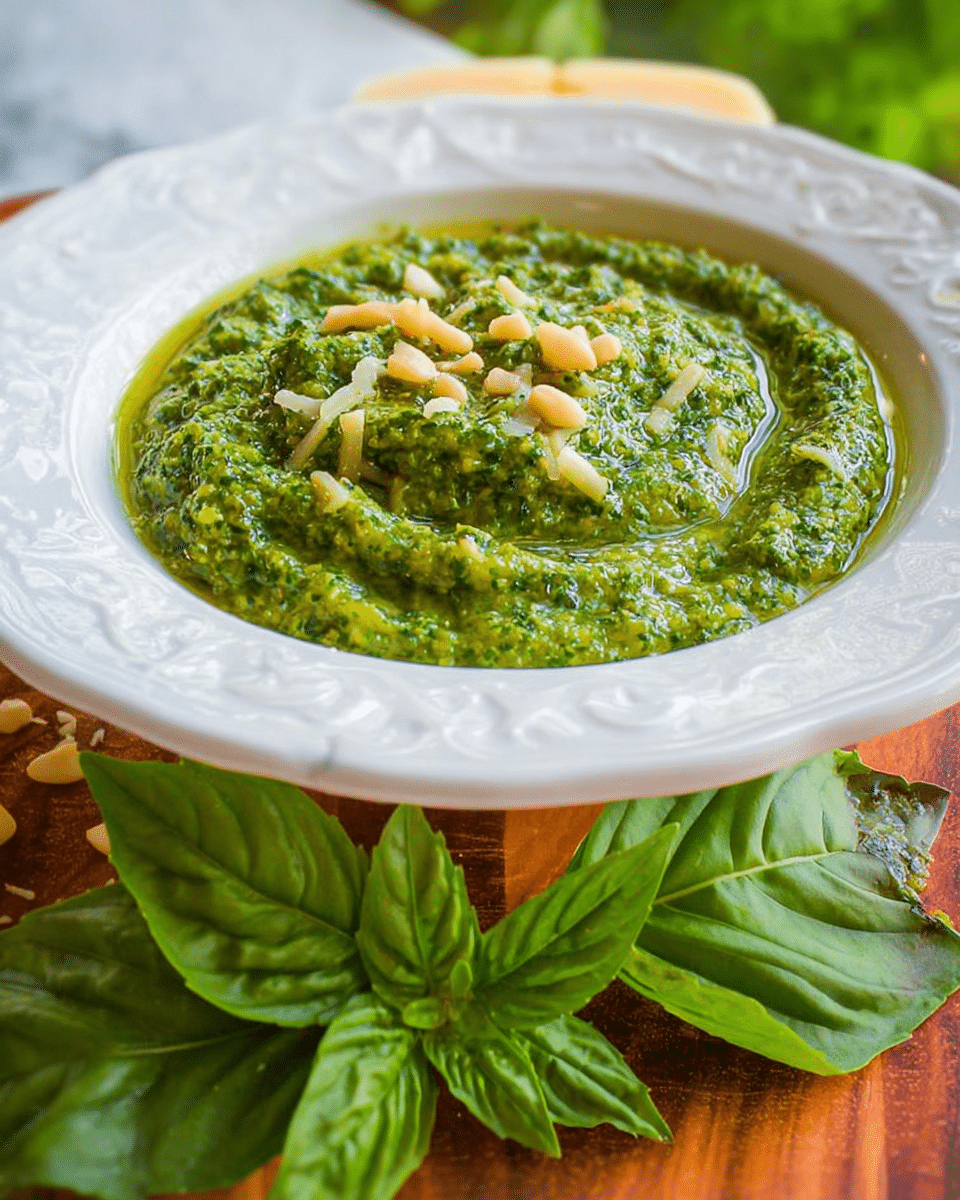
Tired of bland, uninspiring pasta dishes that leave your taste buds underwhelmed? We’ve all been there – staring at yet another boring plate of noodles, wishing for something more exciting. This is where the vibrant, aromatic power of basil pesto comes to the rescue, instantly transforming ordinary meals into extraordinary culinary experiences.
With just a few spoonfuls of this emerald-green sauce, you can elevate everything from simple spaghetti to grilled vegetables, creating restaurant-worthy dishes in your own kitchen. The best part? It takes less than 10 minutes to prepare a batch that can revolutionize your meals all week long.
In this guide, we’ll explore how basil pesto works its magic, the best ingredients for authentic flavor, quick and easy preparation methods, and creative ways to incorporate this versatile sauce into your cooking repertoire.
Why Basil Pesto Works Culinary Magic
- Delivers complex flavors in one simple sauce – nutty, herbaceous, garlicky, and cheesy
- Requires zero cooking – just blend and serve
- Works with virtually any cuisine – Italian, Mediterranean, fusion, or modern American
- Transforms basic ingredients like pasta, chicken, and vegetables into gourmet meals
- Stays fresh in the refrigerator for up to a week (perfect for meal prep)
- Customizable to dietary preferences – easily made vegan, dairy-free, or nut-free
Choosing the Right Basil for Perfect Pesto
Best Basil Varieties for Pesto Magic
Sweet Italian basil (Genovese) creates the most authentic pesto flavor with its balance of sweetness and spice. However, don’t be afraid to experiment! Thai basil offers anise notes for Asian-fusion dishes, while purple basil creates a visually stunning sauce with a slightly more robust flavor.
Sourcing Tips for Basil Pesto Excellence
For the freshest flavor, grow your own basil in a sunny windowsill or garden pot. No green thumb? Farmers’ markets offer superior quality compared to supermarket options. When selecting basil, look for vibrant green leaves without dark spots or wilting, and avoid bunches with flowering stems as they indicate bitterness.
Substitutions for Basil Pesto Innovation
While traditional pesto calls for basil, adventurous cooks can create equally magical variations using:
- Arugula for a peppery kick
- Spinach for a milder, nutrient-packed alternative
- Cilantro for Mexican-inspired dishes
- Sun-dried tomato and basil combination for rich umami flavor
Ingredients & Prep for Magical Basil Pesto
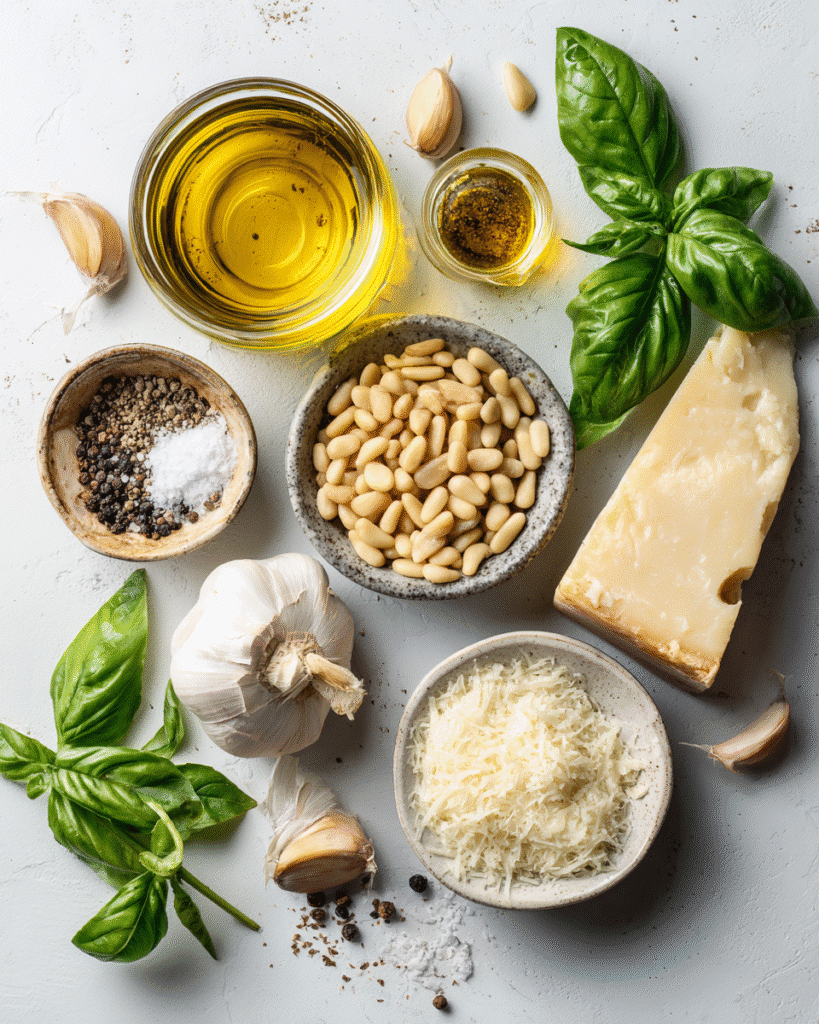
Pesto Essentials
- Fresh Basil Preparation: Remove leaves from stems and wash thoroughly, then dry completely (moisture dilutes flavor and reduces shelf life)
- Garlic Handling: For milder pesto, remove the center germ from garlic cloves; for bolder flavor, use whole cloves
- Nut Toasting: Lightly toast pine nuts (or alternatives) to enhance nuttiness and aroma
Classic Basil Pesto Ingredients
- 2 cups fresh basil leaves, packed
- ½ cup freshly grated Parmesan cheese
- ⅓ cup pine nuts (toasted optional)
- 3 medium garlic cloves
- ½ cup extra virgin olive oil
- ¼ teaspoon salt
- ⅛ teaspoon freshly ground black pepper
Pantry Staples for Pesto Variations
- Good-quality extra virgin olive oil (the backbone of great pesto)
- Sea salt flakes or kosher salt (never table salt)
- Lemon juice (brightens and preserves color)
- Red pepper flakes (for heat-lovers)
Looking for more delicious sauce ideas to elevate your meals? Check out our collection of homemade sauces at Recipes Foody for endless culinary inspiration!
Step-by-Step Basil Pesto Preparation Instructions
Pre-Cooking Basil Pesto Prep
- Thoroughly rinse basil leaves and dry completely using a salad spinner or clean kitchen towels
- Toast pine nuts in a dry skillet over medium heat until fragrant and lightly golden (3-5 minutes), stirring frequently to prevent burning
- Peel garlic cloves and remove bitter center germ if desired
- Grate Parmesan cheese freshly for optimal flavor
Basil Pesto Blending Method
- Add garlic to food processor and pulse until coarsely chopped
- Add toasted pine nuts and pulse until combined with garlic
- Add basil leaves, salt, and pepper, then pulse until roughly chopped
- With processor running, slowly drizzle in olive oil through the feed tube until emulsified
- Add Parmesan cheese and pulse just until incorporated (avoid over-processing)
Basil Pesto Consistency Check
The perfect pesto should have a slightly chunky texture—not completely smooth. If too thick, add additional olive oil one teaspoon at a time. For a looser sauce (ideal for pasta), reserve some pasta cooking water and stir in as needed.
Storing Basil Pesto
To preserve your pesto’s vibrant green color and fresh flavor:
- Transfer to an airtight container
- Pour a thin layer of olive oil on top to create a seal that prevents oxidation
- Refrigerate for up to one week or freeze in ice cube trays for up to three months
Pro Tips for Perfect Basil Pesto Magic
Avoiding Bitter Basil Pesto
- Use a high-quality extra virgin olive oil—lower quality oils can introduce bitterness
- Pulse the basil briefly rather than processing continuously to prevent bruising
- Remove larger stems which can add unwanted bitterness
- Add a small squeeze of lemon juice to brighten flavor and counteract any bitterness
Tool Recommendations for Pesto Success
- Food Processor: Creates the ideal texture for traditional pesto
- Mortar and Pestle: For purists seeking authentic texture and enhanced flavor release
- Immersion Blender: Works in a pinch for smaller batches
- Microplane Grater: For perfectly grating hard cheeses like Parmesan
Preserving Vibrant Green Color
- Blanch basil leaves in boiling water for 5-10 seconds, then immediately shock in ice water before drying thoroughly
- Add a small amount of spinach (neutral in flavor) to enhance and maintain the green color
- Include a small squeeze of lemon juice as a natural preservative
Find more cooking inspiration and mouthwatering recipes on our Pinterest page where we share weekly meal ideas perfect for busy home cooks!
Basil Pesto Flavor Variations
Nut-Free Basil Pesto Options
- Substitute sunflower seeds or pepitas for pine nuts
- Use hemp seeds for added protein and omega fatty acids
- Try breadcrumbs for a traditional Sicilian twist
Dairy-Free and Vegan Basil Pesto
- Replace Parmesan with nutritional yeast for cheesy flavor
- Add a touch more salt and lemon juice to compensate for Parmesan’s umami
- Incorporate a small amount of white miso paste for depth
Global Basil Pesto Fusion
| Pesto Variation | Key Ingredients | Perfect Pairing |
|---|---|---|
| Thai Basil Pesto | Thai basil, cashews, coconut oil, lime | Rice noodles, grilled shrimp |
| Mexican-Style Pesto | Basil, cilantro, pepitas, jalapeño | Quesadillas, grilled fish |
| Mediterranean Pesto | Basil, sun-dried tomatoes, walnuts, feta | Roasted vegetables, lamb |
| Japanese-Inspired Pesto | Basil, edamame, sesame oil, nori flakes | Soba noodles, tofu |
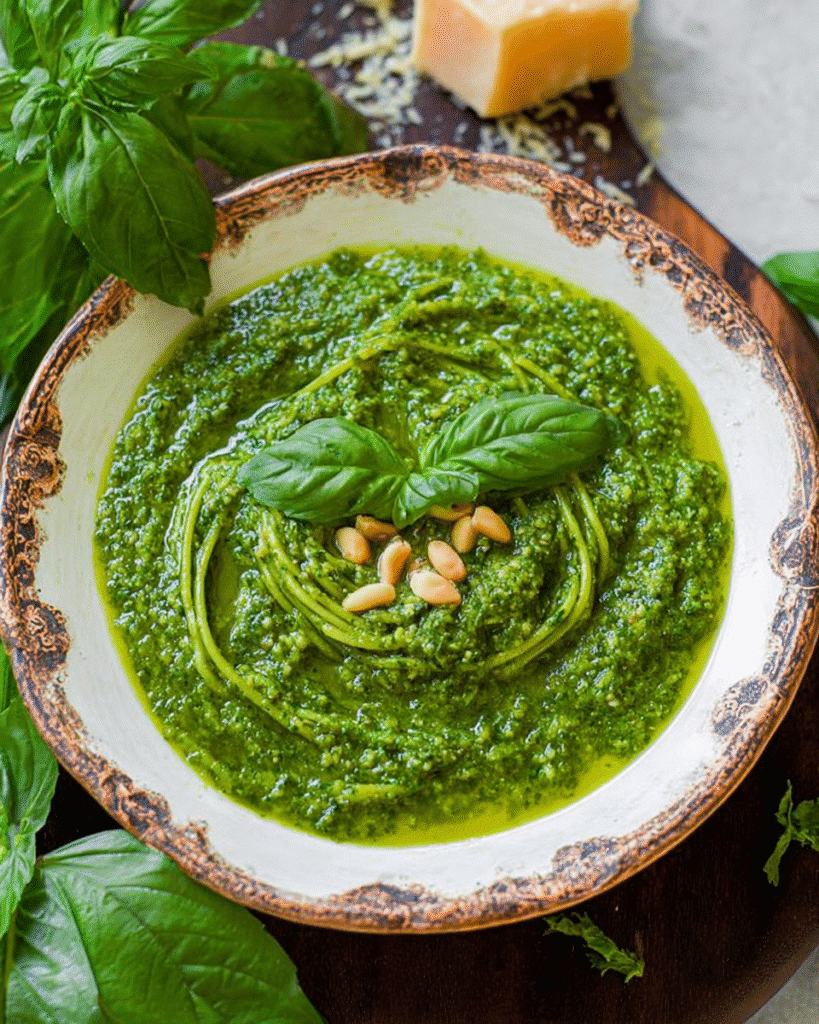
Serving Suggestions for Basil Pesto Magic
- Classic Pasta: Toss with hot pasta and reserved pasta water for the quintessential pesto experience
- Protein Enhancer: Spread on chicken breast before baking or use as a finishing sauce for grilled fish
- Sandwich Upgrade: Replace mayo with pesto on sandwiches and wraps
- Breakfast Revolution: Swirl into scrambled eggs or spread on avocado toast
- Pizza Base: Use instead of traditional tomato sauce for a “pizza bianca”
- Grain Bowl Booster: Drizzle over quinoa, farro, or rice bowls
- Appetizer Star: Mix with Greek yogurt for a crowd-pleasing vegetable dip
- Soup Garnish: Float a spoonful atop tomato or vegetable soup for instant elevation
FAQs About Basil Pesto Magic
Can I freeze basil pesto?
Absolutely! Freeze pesto in ice cube trays, then transfer the frozen cubes to a freezer bag. This way, you can thaw only what you need. Pesto stays good in the freezer for up to 3 months.
Why does my basil pesto turn brown?
Basil oxidizes quickly when exposed to air. Prevent browning by adding a thin layer of olive oil on top when storing, including a squeeze of lemon juice in your recipe, or blanching the basil before making pesto.
Can I make basil pesto without a food processor?
Yes! Traditional pesto was made using a mortar and pestle, which actually creates superior flavor. You can also use a blender, though it may create a smoother texture than the traditional slightly chunky consistency.
How can I make my basil pesto less expensive?
Pine nuts are the most costly ingredient in traditional pesto. Substitute with more affordable nuts like walnuts or almonds. You can also extend your basil with baby spinach, which is more economical and helps maintain the vibrant green color.
Is basil pesto healthy?
Basil pesto contains heart-healthy olive oil, antioxidant-rich basil, and nutrient-dense nuts. However, it is calorie-dense, so use it as a flavorful accent rather than a main ingredient if watching calories.
Conclusion
The transformative power of basil pesto lies in its perfect balance of fresh herbs, nuts, cheese, and olive oil—creating a sauce that’s simultaneously simple and sophisticated. With just one versatile recipe in your culinary arsenal, you can wave goodbye to bland, uninspiring meals forever.
Whether you’re a novice cook looking to elevate weeknight dinners or an experienced chef seeking creative inspiration, basil pesto delivers impressive results with minimal effort. Its bright flavor, versatility, and make-ahead convenience make it the ideal secret weapon for anyone who wants to cook like a professional without spending hours in the kitchen.
Ready to experience the magic? Gather your ingredients, fire up that food processor, and prepare to transform your everyday cooking into extraordinary culinary adventures! For more inspiring recipes that will revolutionize your home cooking, explore our collection of simple yet impressive dishes on Recipes Foody.
Print
How Basil Pesto Transforms Boring Meals into Culinary Magic
- Total Time: 10 mins
- Yield: 1 cup 1x
Description
Vibrant, aromatic, and utterly irresistible — Basil Pesto is the secret weapon that turns ordinary dishes into culinary magic! With fresh basil, Parmesan, garlic, and olive oil, this simple Italian sauce adds instant flavor and sophistication to pasta, sandwiches, veggies, and more.
Ingredients
2 cups fresh basil leaves, packed
1/2 cup grated Parmesan cheese
1/2 cup extra-virgin olive oil
1/3 cup pine nuts (or walnuts)
2 cloves garlic
Salt and freshly ground black pepper, to taste
Juice of 1/2 lemon (optional, for brightness)
Instructions
1. In a food processor, combine basil leaves, pine nuts, and garlic. Pulse until finely chopped.
2. Add Parmesan cheese and pulse again to combine.
3. With the motor running, slowly stream in olive oil until the mixture becomes smooth and creamy.
4. Season with salt, pepper, and lemon juice to taste.
5. Adjust consistency with a little extra olive oil if needed.
6. Transfer to a jar and cover the surface with a thin layer of oil to prevent browning.
7. Store in the refrigerator for up to one week or freeze for longer storage.
Notes
Use pesto as a pasta sauce, sandwich spread, or drizzle over grilled chicken and veggies.
Swap pine nuts for almonds, cashews, or sunflower seeds for a budget-friendly version.
Add spinach or arugula to stretch your basil and create unique flavors.
Homemade pesto tastes fresher and brighter than store-bought — once you make it, you’ll never go back!
- Prep Time: 10 mins
- Cook Time: 0 mins
- Category: Sauce, Condiment
- Method: Blending
- Cuisine: Italian
Nutrition
- Serving Size: 2 tbsp
- Calories: 160
- Sugar: 0g
- Sodium: 140mg
- Fat: 16g
- Saturated Fat: 3g
- Unsaturated Fat: 13g
- Trans Fat: 0g
- Carbohydrates: 2g
- Fiber: 1g
- Protein: 3g
- Cholesterol: 5mg