
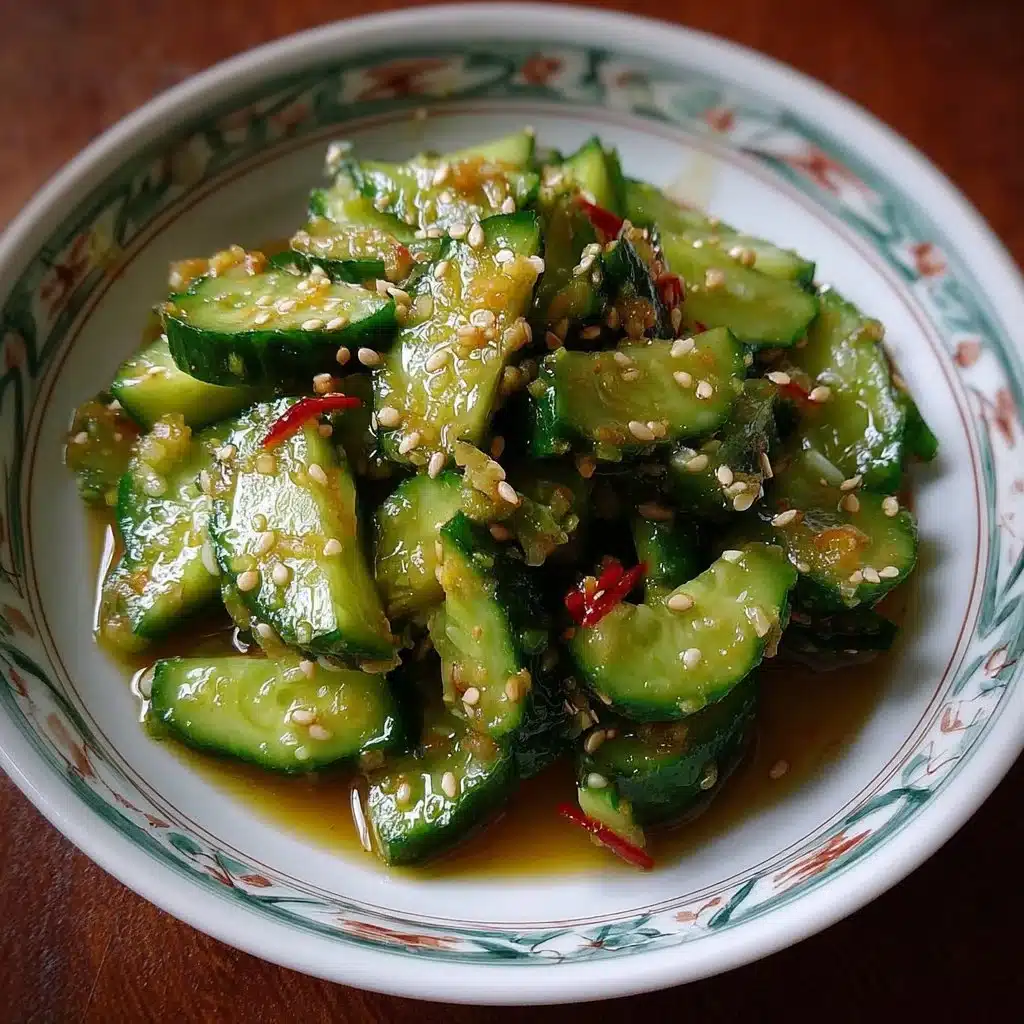
Korean Cucumber Salad (Oi Muchim)
introduction
Korean Cucumber Salad, or Oi Muchim, is a refreshingly simple dish that packs a punch of flavor. This delightful salad brings together the crispness of cucumbers with a spicy and savory dressing. It’s a popular side dish in Korean cuisine, often served with rice and meat dishes. Whether you’re looking for a quick snack or a light side to complement your meal, Oi Muchim is the perfect choice.
why make this recipe
One of the main reasons to make this Korean Cucumber Salad is its simplicity. It requires very few ingredients and takes only a short time to prepare. This salad is not only delicious but also healthy, as cucumbers are low in calories and high in hydration. The combination of flavors from the gochujang and garlic adds a delightful kick that can elevate any meal. Plus, it’s a great way to enjoy seasonal cucumbers in a new and exciting way.
how to make Korean Cucumber Salad
Ingredients:
- 1 lb Korean, Japanese, or English cucumbers
- 1 1/2 tsp salt
- 1 tbsp gochujang (Korean red chili paste)
- 1-2 tbsp liquid sweetener (or sugar)
- 1/2 tbsp soy sauce
- 2 tsp gochugaru (Korean red pepper flakes)
- 3 cloves garlic (minced)
- 1 tsp sesame seeds
- 1 tbsp sesame oil
- 1 scallion (chopped, optional)
- 1 tbsp rice vinegar
- Sesame seeds for topping
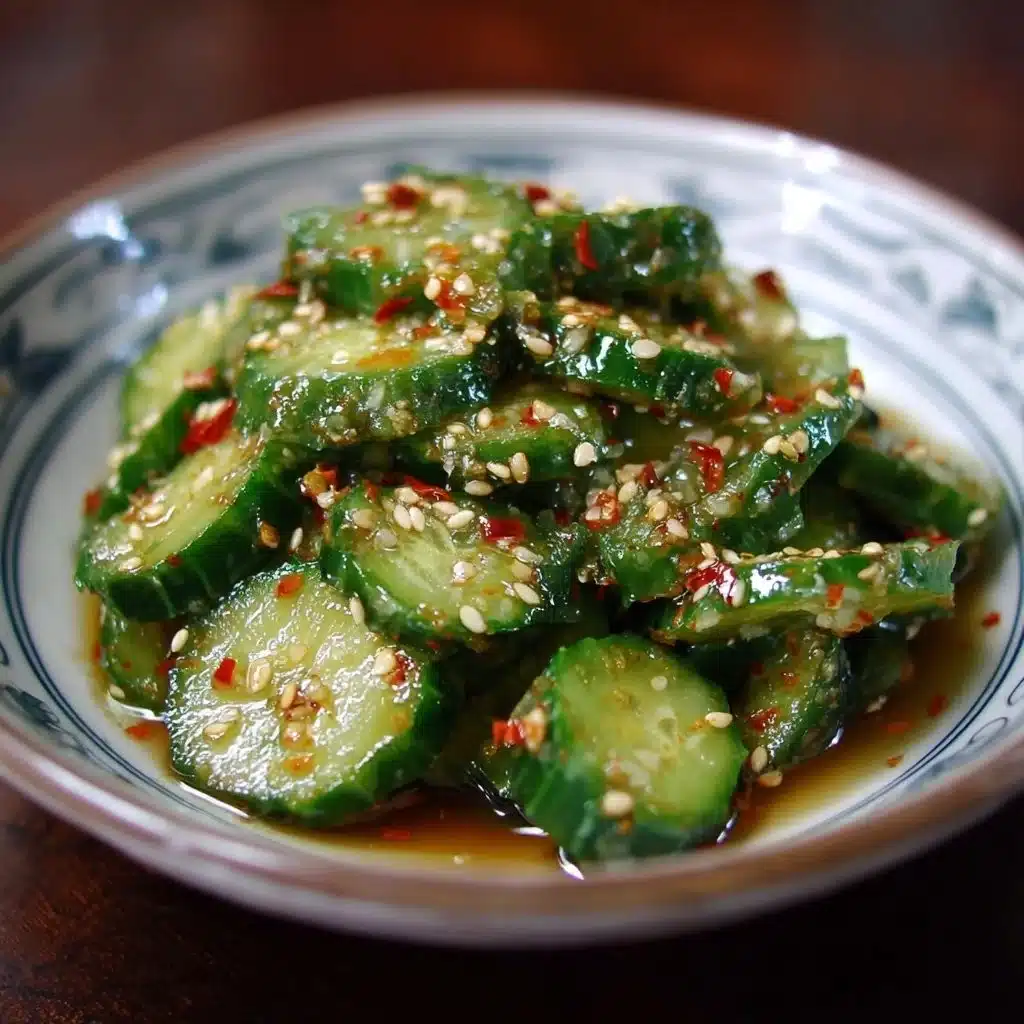
Directions:
- Start by washing the cucumbers thoroughly under running water. Make sure to remove any dirt or residue. After washing, slice the cucumbers into thin rounds and place them in a large bowl.
- Sprinkle the salt over the sliced cucumbers. Allow them to sit for about 10-15 minutes. This step helps to draw out excess moisture, which will keep your salad crunchy. After the time is up, drain the excess liquid from the bowl.
- While the cucumbers are draining, prepare the dressing. In a separate bowl, mix together the gochujang, your choice of sweetener, soy sauce, gochugaru, minced garlic, sesame oil, and rice vinegar. Stir well until everything is combined and you have a smooth dressing.
- Once the cucumbers are drained, add them to the bowl with the dressing. Toss gently to ensure all the cucumbers are evenly coated with the flavorful dressing. If you like, you can also add chopped scallions at this point.
- Transfer the tossed cucumber salad to a serving dish. Garnish the top with sesame seeds for an added crunch. You can serve the salad chilled right away or place it in the refrigerator for a couple of hours to enhance its flavors.
how to serve Korean Cucumber Salad
Korean Cucumber Salad is best served chilled. You can present it in a bowl as a side dish during lunch or dinner. This salad pairs beautifully with grilled meats, rice dishes, or any spicy Korean main course. For a complete Korean meal, serve it alongside dishes like bulgogi (Korean BBQ beef) or bibimbap (mixed rice). The refreshing taste of the salad helps to balance the flavors of heavier dishes, making it an excellent choice for family meals or gatherings.
how to store Korean Cucumber Salad
If you have leftovers, you can store Korean Cucumber Salad in an airtight container in the refrigerator. It is best to consume it within 2-3 days for optimal freshness. However, the water from the cucumbers may cause the salad to become a bit watery over time. If this happens, just give it a quick toss before serving. Avoid freezing the salad, as cucumbers have high water content and can become mushy when thawed.
tips to make Korean Cucumber Salad
- Choose the Right Cucumbers: For the best flavor and texture, it’s recommended to use Korean or Japanese cucumbers. However, English cucumbers work well too. Look for cucumbers that are firm and crisp.
- Adjust the Spice Level: If you prefer a milder salad, you can reduce the amount of gochujang and gochugaru used in the dressing. On the other hand, for those who love heat, feel free to add more.
- Make it Ahead: Oi Muchim can be made a few hours in advance. Letting it chill in the refrigerator before serving allows the flavors to meld together beautifully.
- Add More Vegetables: You can customize the salad by adding other vegetables, such as shredded carrots or thinly sliced radishes for color and texture.
- Check for Freshness: Always taste the salad before serving. If the flavors seem dull, a splash of extra vinegar or a pinch of salt can brighten it up.
variation
While the traditional Oi Muchim is delightful, there are many variations you can explore. You might try adding avocado slices for creaminess or mixing in thinly sliced bell peppers for extra crunch. Another popular variation is to include sesame oil and chopped peanuts for added flavor. You can also experiment with other Asian sauces like Hoisin or Sriracha for a different twist.
FAQs
- Can I use regular cucumbers for this recipe?
- Yes, but for the best taste, it’s recommended to use Korean, Japanese, or English cucumbers. Regular cucumbers tend to be more watery and may not have the same crunch.
- What if I don’t have gochujang?
- If you can’t find gochujang, you can make a substitute by combining red pepper flakes, a bit of soy sauce, and a touch of sugar. While it won’t taste exactly the same, it will give you a spicy and savory flavor.
- Can I make this salad vegan?
- Yes, this recipe is already vegan as it doesn’t contain any meat or dairy. Just make sure to check that the gochujang and soy sauce you use are made without animal products.
- What other dishes can I serve with Korean Cucumber Salad?
- Oi Muchim pairs well with a variety of dishes, including Korean BBQ meats, fried rice, kimchi fried rice, or a hot bowl of noodle soup. It also complements grilled seafood and vegetable dishes nicely.
- How do I make it gluten-free?
- To make the salad gluten-free, ensure that your gochujang and soy sauce are certified gluten-free. You can use tamari as an alternative to traditional soy sauce.
Our Korean Cucumber Salad (Oi Muchim) recipe is a perfect fusion of taste, health, and simplicity. Enjoy this refreshing dish any time you want to brighten your meal!
Print
Korean Cucumber Salad (Oi Muchim)
- Total Time: 15 minutes
- Yield: 4 servings 1x
- Diet: Vegan
Description
A refreshingly simple Korean side dish that brings together crispy cucumbers with a spicy and savory dressing.
Ingredients
- 1 lb Korean, Japanese, or English cucumbers
- 1 1/2 tsp salt
- 1 tbsp gochujang (Korean red chili paste)
- 1–2 tbsp liquid sweetener (or sugar)
- 1/2 tbsp soy sauce
- 2 tsp gochugaru (Korean red pepper flakes)
- 3 cloves garlic (minced)
- 1 tsp sesame seeds
- 1 tbsp sesame oil
- 1 scallion (chopped, optional)
- 1 tbsp rice vinegar
- Sesame seeds for topping
Instructions
- Wash the cucumbers thoroughly under running water and slice them into thin rounds.
- Sprinkle the salt over the sliced cucumbers and allow them to sit for about 10-15 minutes to draw out excess moisture.
- Drain the excess liquid from the bowl.
- In a separate bowl, mix together gochujang, sweetener, soy sauce, gochugaru, minced garlic, sesame oil, and rice vinegar to prepare the dressing.
- Add the drained cucumbers to the bowl with dressing and toss gently to coat.
- Transfer the tossed salad to a serving dish and garnish with sesame seeds.
- Serve immediately or refrigerate for a couple of hours to enhance flavors.
Notes
Serve chilled as a side dish. Pairs well with grilled meats, rice dishes, or spicy Korean main courses.
- Prep Time: 15 minutes
- Cook Time: 0 minutes
- Category: Side Dish
- Method: No-Cook
- Cuisine: Korean
Nutrition
- Serving Size: 1 serving
- Calories: 90
- Sugar: 5g
- Sodium: 600mg
- Fat: 5g
- Saturated Fat: 0.5g
- Unsaturated Fat: 4g
- Trans Fat: 0g
- Carbohydrates: 10g
- Fiber: 2g
- Protein: 2g
- Cholesterol: 0mg