
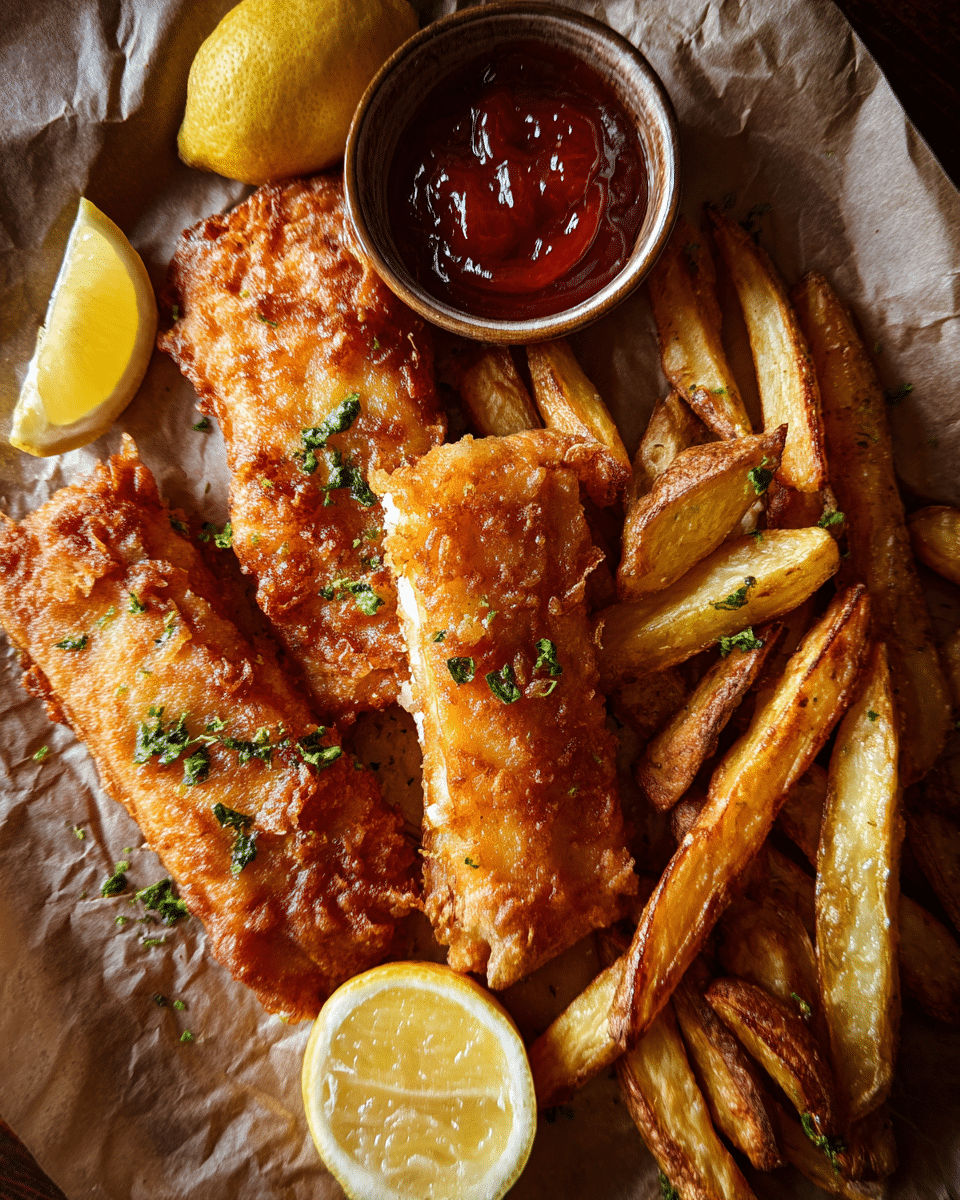
Tired of greasy, calorie-laden fish and chips that leave you feeling weighed down? Traditional deep-fried fish and chips might be a classic comfort food, but it often comes with a side of guilt. This baked fish and chips recipe delivers all the crispy, flavorful satisfaction of the traditional version without the excess oil.
This oven-baked fish and chips recipe transforms a pub classic into a healthier, home-cooked meal that doesn’t sacrifice that essential crunch factor. The fish emerges from the oven with a perfectly golden, crispy coating while remaining tender and flaky inside. The chips turn out deliciously crisp on the outside and fluffy within – no deep fryer needed!
In this comprehensive guide, you’ll discover expert tips for selecting the best fish, creating the perfect crispy coating, achieving restaurant-quality baked chips, and troubleshooting common issues. Whether you’re looking for a healthier dinner option or simply want to enjoy this British classic without the mess of frying, this baked fish and chips recipe is sure to become a family favorite.
Why This Baked Fish & Chips Recipe Works
This baked fish and chips recipe stands out from traditional methods for several compelling reasons:
- Uses affordable, easy-to-find white fish varieties that remain moist when baked
- Achieves a genuinely crispy coating without deep frying
- Ready in under 45 minutes for a convenient weeknight meal
- Significantly reduces calorie and fat content while maintaining classic flavor
- Perfect for health-conscious families who still want to enjoy comfort food classics
- Eliminates the mess and smell of deep frying
- Easily customizable with various seasonings and dipping sauces
- Makes a complete meal in one baking session (fish and chips cook simultaneously)
The secret to this recipe’s success lies in its specially developed crispy coating method and strategic baking technique that ensures both elements reach perfect doneness at the same time. You’ll get that satisfying crunch without the oil splatter or post-meal heaviness.
Choosing the Right Fish for Baked Fish & Chips
Best Fish Varieties for Baked Fish & Chips
The foundation of exceptional baked fish and chips starts with selecting the right type of fish. While traditional fish and chips often features cod, several white fish varieties work beautifully in this baked version:
- Cod: The classic choice with its mild flavor and firm, flaky texture that holds up well to baking
- Haddock: Slightly sweeter than cod with a clean taste and medium-firm texture
- Pollock: More affordable alternative with a similar flavor profile to cod
- Halibut: Premium option with a firm texture and rich, sweet flavor (though typically more expensive)
- Tilapia: Budget-friendly choice with a mild flavor, though slightly less traditional
For the most authentic baked fish and chips experience, cod and haddock remain the top choices. Their substantial flake and ability to maintain moisture during baking make them ideal candidates.
Buying Tips for Fish & Chips Ingredients
When shopping for your baked fish and chips adventure, keep these quality indicators in mind:
For fresh fish:
- Look for clear, bright eyes and shiny, metallic skin
- Fresh fish should smell clean and oceanic, never “fishy”
- The flesh should be firm and spring back when pressed
- Ask your fishmonger for thick, center-cut fillets (at least 1-inch thick) for the best results
For frozen fish:
- Choose individually vacuum-sealed fillets
- Look for “flash-frozen at sea” on packaging for superior quality
- Avoid packages with visible ice crystals, which indicate thawing and refreezing
For potatoes:
- Russet potatoes are ideal for chips due to their high starch content
- Choose firm potatoes without green spots or sprouts
- Medium to large potatoes of similar size will ensure even cooking
If you develop a relationship with your local fishmonger, you can request they cut your fish into even portions, saving you preparation time at home while ensuring consistent cooking.
Substitutions for Baked Fish & Chips
Don’t have the traditional ingredients on hand? Here are some effective substitutions that maintain the spirit of baked fish and chips:
Fish alternatives:
- For a non-fish option, try thick slices of halloumi cheese (reduces baking time by about 5 minutes)
- Chicken tenders can be prepared with the same coating for “chicken and chips”
Potato alternatives:
- Sweet potatoes make delicious chips with a different flavor profile (reduce cooking time by 5 minutes)
- Parsnips or carrots cut into sticks offer a lower-carb alternative
- Zucchini slices provide a very light option (reduce cooking time significantly)
Coating alternatives:
- Gluten-free breadcrumbs or crushed rice cereal for those avoiding wheat
- Ground nuts mixed with spices for a grain-free coating option
- Crushed potato chips or plantain chips for an unexpected twist
Remember that any substitutions may alter cooking times, so monitor your baked fish and chips closely the first time you experiment with alternatives.
Ingredients & Prep for Baked Fish & Chips
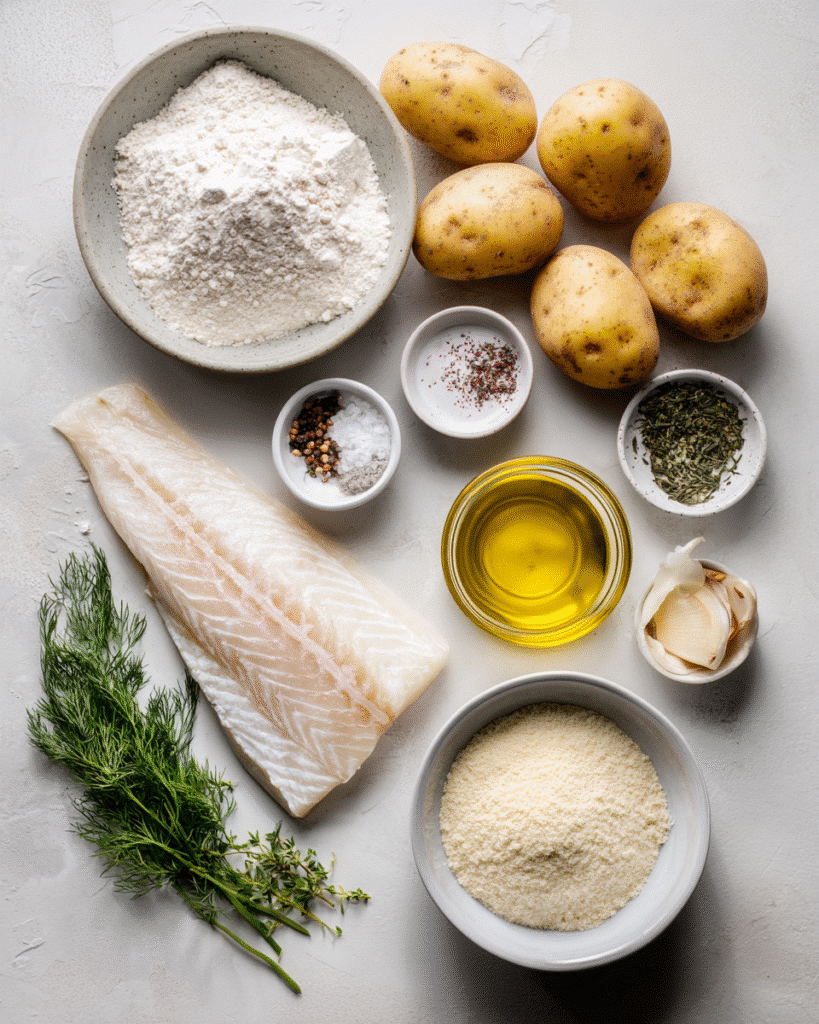
Fish Prep Essentials for Baking
Proper fish preparation is crucial for achieving that perfect crispy exterior while maintaining moist, flaky fish inside:
- Thaw completely if using frozen fish (preferably overnight in the refrigerator)
- Pat dry thoroughly with paper towels – excess moisture prevents crispiness
- Cut into even portions (about 4-6 oz each) for consistent cooking
- Season fish with salt and pepper before applying coating
- Let rest at room temperature for 10-15 minutes before baking to promote even cooking
The thickness of your fish fillets matters significantly. For ideal results, choose pieces that are between 1-1½ inches at their thickest point. Thinner fillets will cook faster and may dry out before achieving a properly crispy coating.
Coatings & Seasonings for Baked Fish & Chips
The coating is what transforms ordinary baked fish into crispy fish and chips magic. Here’s what you’ll need:
Basic Crispy Fish Coating:
- ½ cup all-purpose flour
- 2 eggs, beaten
- 1½ cups panko breadcrumbs
- 1 teaspoon garlic powder
- 1 teaspoon onion powder
- 1 teaspoon paprika
- ½ teaspoon dried thyme
- ¼ teaspoon cayenne pepper (optional)
- 1 tablespoon olive oil (to moisten breadcrumbs)
For Extra-Crispy Results:
- Toast panko breadcrumbs in a dry pan until lightly golden before using
- Mix 2 tablespoons of cornmeal into the breadcrumb mixture
- Add 2 tablespoons of grated Parmesan cheese to the breadcrumbs for both flavor and crispiness
The key to a truly crispy baked coating is adding a small amount of oil directly to your breadcrumb mixture. This helps achieve that golden-brown finish that’s usually provided by deep frying.
Chip Preparation for Perfect Baking
Creating perfectly crispy baked chips requires specific preparation techniques:
- Wash and scrub potatoes thoroughly (peeling is optional)
- Cut into even sticks approximately ½-inch thick for consistent cooking
- Soak in cold water for at least 30 minutes (or up to overnight in the refrigerator) to remove excess starch
- Drain and pat completely dry with clean kitchen towels
- Toss with oil and seasonings in a large bowl, ensuring even coating
Chip Seasoning Basics:
- 2 tablespoons olive oil or avocado oil
- 1 teaspoon salt
- ½ teaspoon garlic powder
- ½ teaspoon paprika
- ¼ teaspoon black pepper
For extra-crispy chips, add 1 tablespoon of cornstarch to the seasoning mix – this creates an ultra-thin coating that promotes crispiness in the oven.
The soaking step is non-negotiable for truly crispy baked chips. It removes excess starch that would otherwise prevent the potatoes from crisping properly in the oven. Don’t skip this crucial preparation step!
Visit the RecipesFoody Pinterest board for visual inspiration on how to cut and prepare your potatoes for the perfect baked chips experience.
Step-by-Step Cooking Instructions for Baked Fish & Chips
Pre-Cooking Prep for Baked Fish & Chips
Before the actual baking begins, these preparation steps are essential for crispy baked fish and chips success:
- Preheat your oven to 425°F (220°C) – high heat is crucial for crispy results
- Line two baking sheets with parchment paper or silicone mats
- Set up your breading station: one plate with seasoned flour, one bowl with beaten eggs, and one plate with seasoned breadcrumb mixture
- Prepare a wire rack to place over one of the baking sheets (for the fish)
- Gather all tools: tongs, spatula, instant-read thermometer, and timer
A properly preheated oven is absolutely critical. Allow at least 20 minutes for your oven to reach the proper temperature, even if it signals readiness earlier. Most ovens require this additional time to heat completely.
Baking Method for Fish & Chips
For the Chips:
- Spread prepared potato sticks in a single layer on one baking sheet, ensuring they don’t touch
- Place in preheated oven on the lowest rack position
- Bake for 15 minutes, then remove and flip each chip
- Return to oven for another 15-20 minutes until golden and crispy
For the Fish:
- Dredge each fish piece in flour, shaking off excess
- Dip into beaten egg, ensuring complete coverage
- Press firmly into breadcrumb mixture, covering all surfaces
- Place breaded fish on the wire rack over the second baking sheet
- Lightly spray or drizzle fish with olive oil for enhanced browning
- When chips have been flipped (15-minute mark), add fish to the oven on the middle rack
- Bake fish for 15-20 minutes until coating is golden and crisp
The wire rack elevation is crucial for the fish – it allows hot air to circulate underneath, ensuring the bottom gets crispy rather than soggy. If you don’t have a wire rack, flip the fish halfway through cooking.
Doneness Check for Baked Fish & Chips
Perfectly baked fish and chips require careful monitoring for doneness:
For Fish:
- Internal temperature should reach 145°F (63°C) when tested with an instant-read thermometer
- Fish should be opaque and flake easily with a fork
- Coating should be golden brown and crisp to the touch
- Total cooking time typically ranges from 15-20 minutes depending on thickness
For Chips:
- Edges should be golden brown and crisp
- Center should be tender when pierced with a fork
- They should make a slight “crunching” sound when broken
- Total cooking time is typically 30-35 minutes
If your chips are done before the fish, simply remove them from the oven and keep warm by covering loosely with foil. If the fish is done first (unlikely with proper timing), remove it while the chips finish.
Resting and Serving Baked Fish & Chips
Proper resting and serving is the final crucial step for perfect baked fish and chips:
- Allow fish to rest on the wire rack for 3-5 minutes after removing from oven
- Transfer chips to a paper towel-lined bowl and toss with a pinch of additional salt while hot
- Serve immediately on warmed plates for the best experience
- Accompany with traditional condiments: malt vinegar, tartar sauce, and lemon wedges
This brief resting period allows the juices in the fish to redistribute and the exterior to set up for maximum crispiness. Don’t skip this step, even though the temptation to dive in immediately will be strong!
For restaurant-style presentation, serve in paper-lined baskets or wrap portions in parchment paper. The traditional newspaper wrapping is no longer recommended due to ink transfer concerns.
Pro Tips for Perfect Baked Fish & Chips
Avoiding Soggy Baked Fish & Chips
The most common complaint with baked fish and chips is sogginess. Here’s how to ensure crispy results every time:
For Crispy Fish:
- Pat fish completely dry before coating
- Use panko breadcrumbs rather than regular breadcrumbs for extra crunch
- Toast breadcrumbs lightly before using
- Add a small amount of oil directly to breadcrumb mixture
- Use the wire rack method for baking
- Ensure oven is fully preheated to 425°F
- Don’t overcrowd the baking sheet
- Apply a light spray of oil to the breaded fish before baking
For Crispy Chips:
- Soak potato sticks to remove excess starch
- Dry thoroughly after soaking
- Cut uniform sizes for even cooking
- Spread in a single layer without overcrowding
- Flip halfway through baking
- Use a light coating of cornstarch in your seasoning
If you live in a humid climate, these steps become even more important, as ambient moisture can affect crispiness. In extreme humidity, consider running your kitchen exhaust fan during preparation and cooking.
Check out RecipesFoody for more tips on achieving perfectly crispy results in all your baked recipes.
Tool Recommendations for Baked Fish & Chips
The right tools make a significant difference in your baked fish and chips results:
Essential Tools:
- Sharp chef’s knife for cutting potatoes uniformly
- Instant-read digital thermometer for checking fish doneness
- Wire cooling rack that fits inside a baking sheet
- Heavy-gauge, light-colored baking sheets (dark ones can burn the bottom)
- Silicone mat or parchment paper for easy release and cleanup
- Fish spatula or thin metal spatula for turning
Helpful But Optional:
- Mandoline slicer with guard for perfectly uniform potato sticks
- Oil sprayer/mister for light, even oil application
- Kitchen timer with dual settings (for fish and chips separately)
- Insulated oven mitts for handling hot pans
Investment in a good wire rack that fits inside your baking sheet is perhaps the most important tool upgrade for this recipe, as it enables proper air circulation around the fish for maximum crispiness.
Storage & Reheating Baked Fish & Chips
While baked fish and chips are best enjoyed immediately after cooking, proper storage and reheating techniques can save leftovers:
Storage Guidelines:
- Refrigerate leftovers within 2 hours of cooking
- Store fish and chips separately in airtight containers
- Consume within 2 days for best quality
- Not recommended for freezing (texture will deteriorate)
Reheating for Maximum Crispiness:
- Preheat oven to 350°F (175°C)
- Place fish on a wire rack over a baking sheet
- Arrange chips in a single layer on baking sheet
- Reheat for 10-12 minutes until hot and re-crisped
- Avoid microwave reheating (results in soggy texture)
For the best next-day experience, consider repurposing leftover fish in a fish sandwich or salad rather than attempting to recreate the original crispy texture.
Flavor Variations for Baked Fish & Chips
Spicy Baked Fish & Chips Twist
Add some heat to your baked fish and chips with these flavorful modifications:
- Add 1 teaspoon of cayenne pepper to your breadcrumb mixture
- Mix 1 tablespoon of hot sauce into the egg wash
- Include 1 teaspoon of crushed red pepper flakes in your chip seasoning
- Serve with spicy sriracha tartar sauce (mix 2 tablespoons sriracha into ½ cup tartar sauce)
- Finish with a dusting of chili powder right after baking
This spicy variation pairs beautifully with a cooling side of coleslaw to balance the heat. The contrast of spicy coating with the mild fish creates a delightful flavor experience.
Herb-Crusted Baked Fish & Chips
For an aromatic, herb-forward version of baked fish and chips:
- Add 3 tablespoons of finely chopped fresh herbs to breadcrumb mixture (dill, parsley, chives work well)
- Include 1 tablespoon of lemon zest in the breadcrumbs
- Season chips with rosemary and thyme
- Serve with herb-infused vinegar or a yogurt-herb dipping sauce
- Garnish with additional fresh herbs just before serving
This variation feels lighter and more summery, perfect for outdoor dining. The herbs add complexity without overwhelming the delicate fish flavor.
Global Flavors for Baked Fish & Chips
Take your baked fish and chips on a world tour with these international variations:
| Style | Fish Coating | Chip Seasoning | Serving Suggestions |
|---|---|---|---|
| Mediterranean | Add 2 tsp oregano and 1 tbsp lemon zest to breadcrumbs | Olive oil, oregano, and lemon pepper | Serve with tzatziki sauce |
| Cajun | Mix 2 tbsp Cajun seasoning into breadcrumbs | Cajun spice blend and garlic powder | Serve with remoulade sauce |
| Asian-Inspired | Add 1 tbsp sesame seeds and 1 tsp five-spice to coating | Five-spice powder and white pepper | Serve with sriracha mayo |
| Indian | Mix 2 tsp curry powder and 1 tsp garam masala into breadcrumbs | Curry powder and cumin | Serve with mint-yogurt chutney |
| Mexican | Add 1 tbsp taco seasoning and crushed tortilla chips to coating | Chili powder, cumin, and lime zest | Serve with avocado crema |
These international variations transform the humble baked fish and chips into an exciting culinary adventure. Each version maintains the crispy texture while introducing new flavor dimensions.
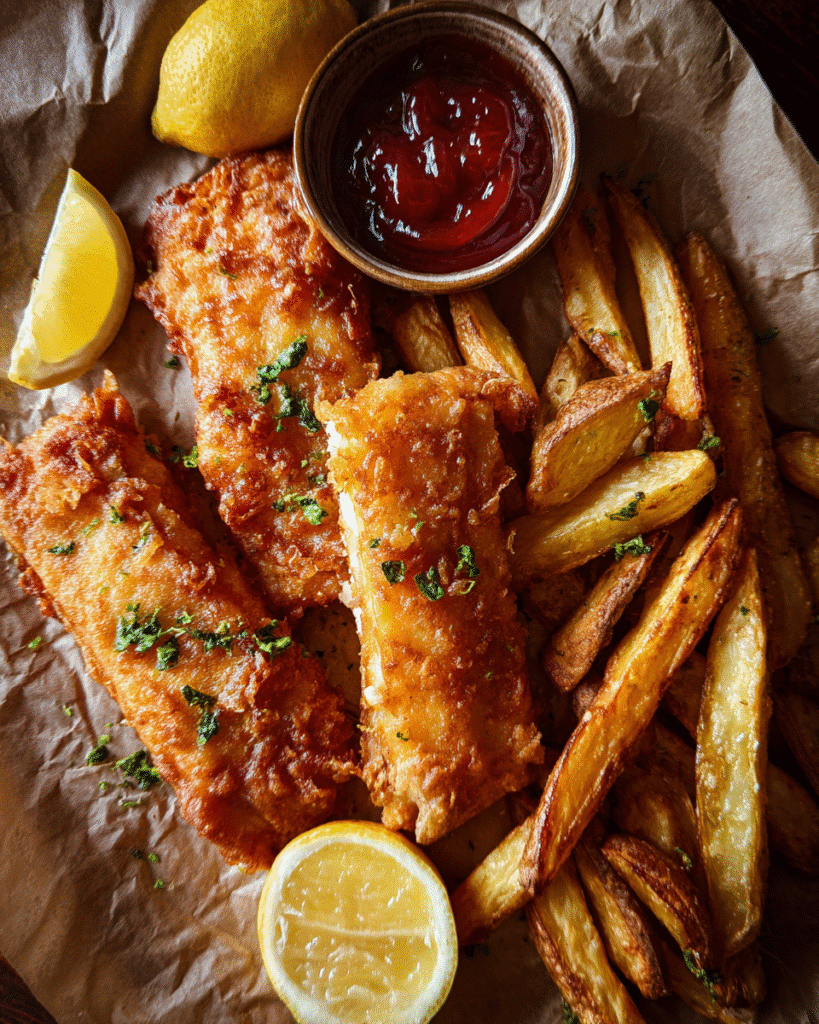
Serving Suggestions for Baked Fish & Chips
The perfect baked fish and chips experience extends beyond the main components to include complementary sides, sauces, and beverages:
Traditional Accompaniments
Honor the classic fish and chips experience with these traditional sides:
- Malt vinegar for sprinkling over hot chips
- Homemade tartar sauce (mix mayonnaise, chopped pickles, capers, and lemon juice)
- Mushy peas (traditional British side made from cooked and seasoned green peas)
- Lemon wedges for squeezing over fish
- Coleslaw with a vinegar-based dressing
For an authentic touch, serve in paper cones or parchment-lined baskets with small wooden forks. This presentation nods to the dish’s street food origins.
Modern Side Pairings
Update the classic meal with these contemporary sides:
- Roasted Brussels sprouts with balsamic glaze
- Grilled asparagus with lemon
- Avocado and cucumber salad
- Marinated tomato salad with fresh basil
- Garlic-roasted broccoli
These lighter, vegetable-forward sides balance the meal and add nutritional variety. They can be roasted alongside your fish and chips at the same temperature.
Beverage Pairings
Complete your baked fish and chips experience with these complementary beverages:
- Crisp lager or pilsner
- Sparkling water with lemon
- Unsweetened iced tea with lemon
- Dry hard cider
- Sauvignon Blanc or unoaked Chardonnay
The ideal beverage has enough acidity to cut through the richness of the dish while refreshing the palate between bites. Carbonated options work particularly well with the crispy texture.
For a complete family meal experience, set up a condiment station allowing each person to customize their plate. Include various sauces, vinegars, and lemon wedges for a interactive dining experience.
FAQs About Baked Fish & Chips
Common Questions About Fish Selection and Preparation
Q: Can I use frozen fish for baked fish and chips?
A: Yes, but thaw completely in the refrigerator overnight and pat very dry before coating. Frozen fish often releases extra moisture during baking, which can affect crispiness.
Q: How thick should my fish fillets be?
A: Aim for fillets that are 1 to 1½ inches at their thickest point. Thinner pieces cook too quickly and may become dry before the coating crisps properly.
**Q: Do I need to