
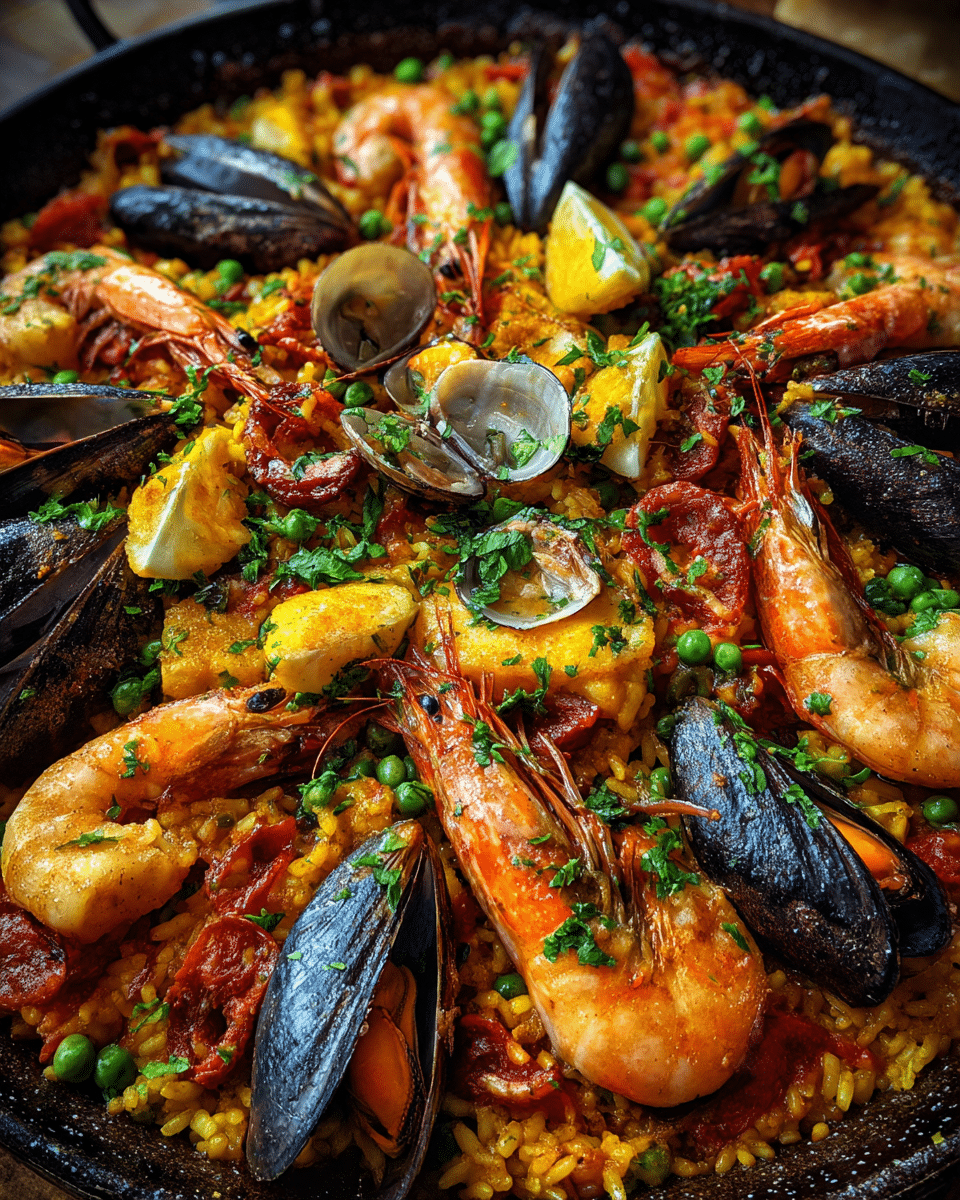
Are you tired of soggy, flavorless paella that bears no resemblance to the vibrant dish you enjoyed in Spain? Nothing’s more disappointing than spending hours on a special seafood paella only to end up with mushy rice and overcooked shrimp. But don’t worry – your home kitchen can absolutely produce the same golden, flavor-packed seafood paella that Spanish restaurants are famous for.
This authentic seafood paella recipe delivers a show-stopping dish with perfectly cooked rice, tender seafood, and that coveted socarrat (crispy bottom layer). You’ll discover professional techniques that transform simple ingredients into restaurant-worthy paella without special equipment or hard-to-find ingredients.
In this comprehensive guide, you’ll learn the crucial seafood selection tips, rice cooking secrets, and troubleshooting tricks that professional chefs use. Plus, we’ll cover common paella pitfalls and how to avoid them, making this your go-to resource for foolproof seafood paella.
Why This Seafood Paella Recipe Works
- Creates authentic socarrat (crispy bottom layer) that defines true Spanish paella
- Perfectly balances saffron, paprika and seafood flavors for depth without overpowering
- Uses accessible ingredients while maintaining traditional techniques
- Scales easily for intimate dinners or impressive entertaining
- Delivers restaurant results with straightforward home cooking methods
Choosing the Right Seafood for Paella
Best Seafood Varieties for Authentic Paella
Traditional Spanish seafood paella typically features a combination of shellfish and fish. For the most authentic results, consider:
- Shrimp/Prawns: Large, shell-on varieties add more flavor during cooking
- Mussels and Clams: Choose fresh, tightly closed shellfish that smell like the ocean
- Calamari/Squid: Adds wonderful texture when not overcooked
- Firm White Fish: Monkfish, sea bass, or halibut hold their shape well
Seafood Quality Indicators
When selecting seafood for your paella, freshness is paramount:
- Shellfish should smell clean and briny (never fishy)
- Fish should have clear eyes, firm flesh, and no strong odor
- Frozen seafood can work well—look for flash-frozen options with minimal glazing
Sustainable Substitutions
If certain seafood varieties aren’t available or sustainable in your area:
- Replace langoustines with large shrimp or crawfish
- Substitute farmed mussels for wild when appropriate
- Use whatever local white fish is freshest at your market
Ingredients & Prep for Seafood Paella
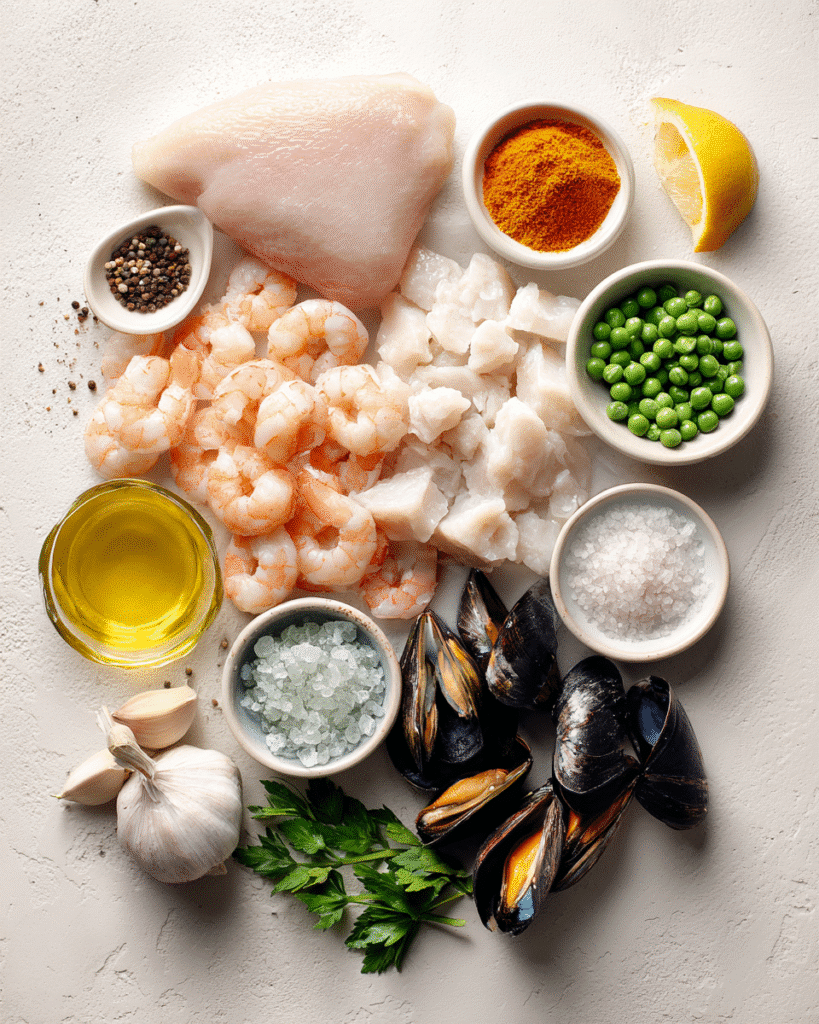
Seafood Prep Essentials
Proper preparation ensures your seafood cooks perfectly:
- Clean mussels and clams by scrubbing shells and removing beards
- Leave shrimp shells on for flavor, but devein for better eating experience
- Cut squid bodies into rings and tentacles into manageable pieces
- Portion fish into 2-inch chunks to prevent overcooking
The Perfect Paella Base
- Bomba rice (1½ cups)
- Saffron threads (1 generous pinch)
- Sweet paprika (1 tablespoon)
- Fish or seafood stock (4-5 cups)
- Sofrito: onion, garlic, bell pepper, tomato (1 cup combined)
- Olive oil (¼ cup)
- Lemon wedges for serving
Essential Paella Ingredients
Good paella depends on quality basics:
- Rice: Bomba or Calasparra rice absorbs more liquid without getting mushy
- Saffron: The signature flavor and golden color (don’t skip this!)
- Stock: Homemade fish stock provides the best flavor foundation
Check out more delicious recipes at Recipes Foody for culinary inspiration beyond paella!
Step-by-Step Seafood Paella Cooking Instructions
Pre-Cooking Seafood Paella Prep
- Toast saffron threads in a dry pan for 30 seconds, then crush and steep in ¼ cup hot stock
- Create sofrito by slowly sautéing onions, garlic, and peppers until caramelized (15-20 minutes)
- Arrange all seafood on a platter, seasoned lightly with salt and ready to add at different stages
Seafood Paella Cooking Method
- Heat olive oil in a 15-inch paella pan or large skillet over medium-high heat
- Sauté any firm seafood (like squid) briefly, then remove and reserve
- Add sofrito and cook until fragrant, about 2 minutes
- Stir in paprika and rice, coating grains thoroughly with oil
- Pour in saffron-infused stock plus remaining stock, bring to a boil
- Reduce heat and simmer without stirring for 10 minutes
- Arrange shellfish (clams, mussels) with hinges down into the rice
- Add remaining seafood, arranging artfully on top
- Continue cooking until rice is tender and liquid is absorbed (about 10 more minutes)
Seafood Paella Doneness Check
The perfect seafood paella should have:
- Rice that’s tender but still distinct (not creamy like risotto)
- Shellfish opened completely (discard any unopened shells)
- A golden crust forming at the bottom (socarrat)
- No visible liquid remaining in the pan
Resting Your Seafood Paella
This crucial step completes the cooking process:
- Remove from heat and cover with a clean kitchen towel
- Let rest 5-10 minutes to allow flavors to meld and moisture to redistribute
- The resting period helps develop the coveted socarrat crust
Pro Tips for Perfect Seafood Paella
Avoiding Common Seafood Paella Mistakes
- Never stir the rice after adding stock – this releases starch and creates creamy (not authentic) texture
- Use the correct rice-to-liquid ratio – typically 1 part rice to 3 parts liquid for Bomba rice
- Add delicate seafood at different times – shellfish needs longer than fish fillets
- Listen for the “socarrat sizzle” – a gentle crackling indicates the bottom crust is forming
Essential Seafood Paella Equipment
While traditional tools help, you can succeed with:
- A wide, shallow pan (paella pan ideal, but large skillet works)
- Heavy-duty aluminum foil (to cover if needed)
- Instant-read thermometer to check rice doneness (should reach 195°F)
Seafood Paella Storage & Reheating
Paella is best fresh, but if storing:
- Refrigerate leftovers within 2 hours in shallow containers
- Consume within 2 days for best quality and safety
- Reheat gently with a splash of stock to maintain texture
Find more inspiration for your next cooking adventure on Pinterest where we share stunning food photography and recipe ideas!
Seafood Paella Flavor Variations
Mediterranean Seafood Paella
- Add chorizo at the sofrito stage for smoky depth
- Mix in artichoke hearts during the final cooking phase
- Garnish with roasted red pepper strips
Herb-Enhanced Seafood Paella
- Incorporate fresh rosemary sprigs during cooking
- Finish with chopped parsley and oregano
- Add bay leaves to the stock for deeper flavor
Citrus-Forward Seafood Paella
- Include orange zest in the sofrito
- Serve with both lemon and lime wedges
- Deglaze pan with a splash of dry white grape juice before adding stock
| Paella Variation | Key Ingredients | Cooking Adjustment | Perfect Pairing |
|---|---|---|---|
| Mediterranean | Chorizo, artichokes, red peppers | Add chorizo first to release oils | Albariño wine |
| Herb-Enhanced | Rosemary, parsley, oregano | Infuse herbs into hot oil before sofrito | Verdejo wine |
| Citrus-Forward | Orange zest, lemon, lime | Reduce stock slightly to account for citrus juice | Sparkling water with citrus |
| Spicy Seafood | Chili flakes, harissa paste | Add heat elements to sofrito base | Chilled gazpacho |
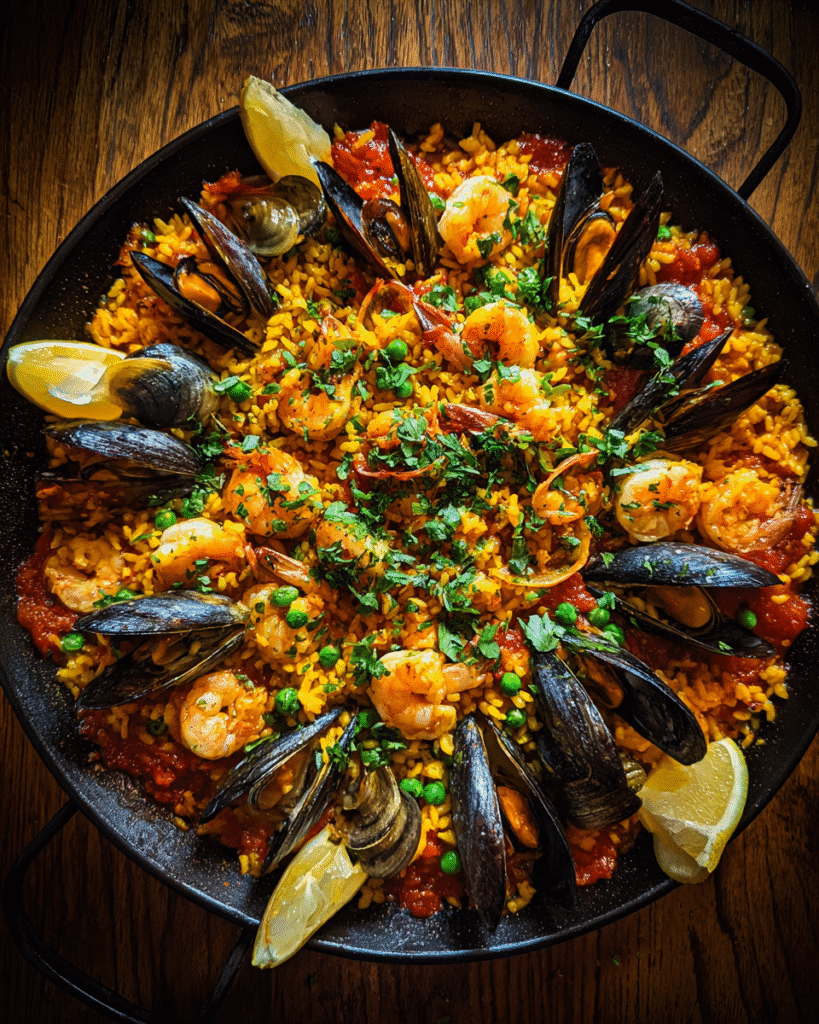
Serving Suggestions for Seafood Paella
Elevate your seafood paella experience with these perfect accompaniments:
- Fresh salads: Simple green salad with sherry vinaigrette cuts through the richness
- Crusty bread: Essential for soaking up the flavorful juices
- Spanish tapas: Serve smaller portions of paella alongside patatas bravas and marinated olives
- Beverage pairings: Dry Spanish whites like Albariño or Verdejo complement without overwhelming
For a complete Spanish feast, arrange the paella centerpiece surrounded by small plates of almonds, Manchego cheese, and marinated vegetables.
Seafood Paella FAQs
Can I make seafood paella without a paella pan?
Yes! While traditional pans help create authentic socarrat, any wide, shallow skillet with at least 2-inch sides will work. The key is maximizing the surface area contacting the heat.
How do I know when the rice is perfectly cooked?
Perfectly cooked paella rice should be tender but still have slight resistance in the center. All liquid should be absorbed, and you might hear a gentle crackling sound as the socarrat forms.
What’s the secret to achieving socarrat (crispy bottom)?
Increase heat slightly during the final 1-2 minutes of cooking, listening for a gentle sizzle without burning. Never stir after the initial liquid addition, and ensure your pan has good contact with the heat source.
Can I prepare components of seafood paella ahead of time?
Yes! Prepare sofrito up to 3 days ahead and refrigerate. Clean and prep seafood the morning of serving. The final cooking should happen just before serving for best results.
Is it safe to eat seafood that hasn’t opened during cooking?
No – discard any clams or mussels that remain closed after cooking, as this indicates they weren’t alive when cooking began.
Conclusion
Mastering seafood paella isn’t just about following a recipe—it’s about understanding the techniques that transform simple ingredients into something magical. By respecting traditional methods while adapting to your own kitchen, you’ll create a dish that rivals your favorite Spanish restaurant.
Remember that perfect paella comes with practice. Each time you prepare this iconic dish, you’ll develop a better feel for the rice, the timing of adding seafood, and the subtle cues that signal the development of socarrat. Don’t be discouraged if your first attempt isn’t perfect—even experienced Spanish cooks constantly refine their technique.
Now it’s your turn to gather friends and family around a steaming pan of golden seafood paella! Share your paella success stories in the comments, and don’t forget to tag us when you post your masterpiece on social media. ¡Buen provecho!