
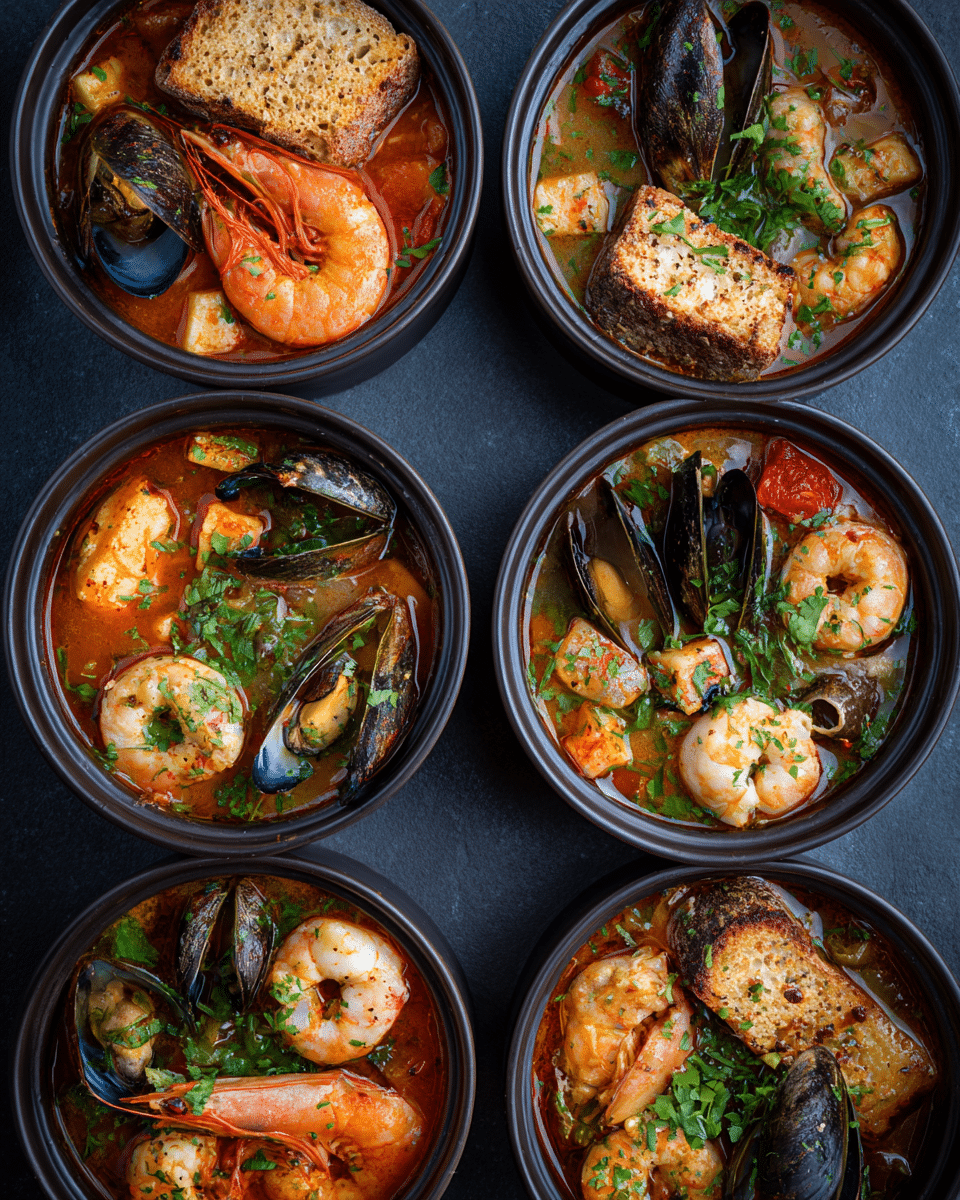
Are you tired of seafood stews that lack depth and authentic Mediterranean flavor? Creating the perfect bouillabaisse can seem intimidating, but it doesn’t have to be. This classic Provençal seafood stew combines the freshest catch with aromatic herbs and spices for a truly transformative culinary experience. In this guide, you’ll discover professional tips for selecting seafood, balancing flavors, and achieving that signature saffron-infused broth that makes bouillabaisse legendary. We’ll cover everything from selecting the perfect seafood medley to serving suggestions that will elevate your dining experience.
Why This Bouillabaisse Recipe Works
- Uses readily available seafood that can be found at most fish markets
- Develops complex flavors in under 30 minutes of active cooking time
- Perfect for impressive dinner parties or special weekend meals
- Creates authentic Provençal flavors without requiring a trip to France
- Offers flexible seafood options to accommodate preferences and availability
Choosing the Right Seafood for Bouillabaisse
Best Seafood Varieties for Authentic Bouillabaisse
Traditional Provençal bouillabaisse calls for a variety of Mediterranean fish and shellfish. For authentic results, aim to include at least 3-4 different types of seafood in your stew. White-fleshed fish like cod, halibut, or snapper form the backbone of a good bouillabaisse, while shellfish add complexity and visual appeal.
Buying Tips for Bouillabaisse Seafood
When purchasing seafood for your bouillabaisse, freshness is paramount. Look for:
- Fish with clear, bright eyes and firm flesh that springs back when pressed
- Shellfish that are tightly closed when raw (discard any that don’t open after cooking)
- A fresh, clean ocean scent (avoid anything with a strong “fishy” smell)
- Sustainable seafood options with MSC certification when possible
Substitutions for Bouillabaisse Ingredients
Can’t find traditional Mediterranean fish? Don’t worry. Bouillabaisse is adaptable:
- Replace rascasse (scorpion fish) with red snapper or sea bass
- Substitute monkfish with firm white fish like halibut or cod
- Use mussels instead of harder-to-find Mediterranean shellfish
- Frozen seafood can work in a pinch—just thaw completely and pat dry before using
Ingredients & Prep for Perfect Bouillabaisse
Seafood Prep Essentials for Bouillabaisse
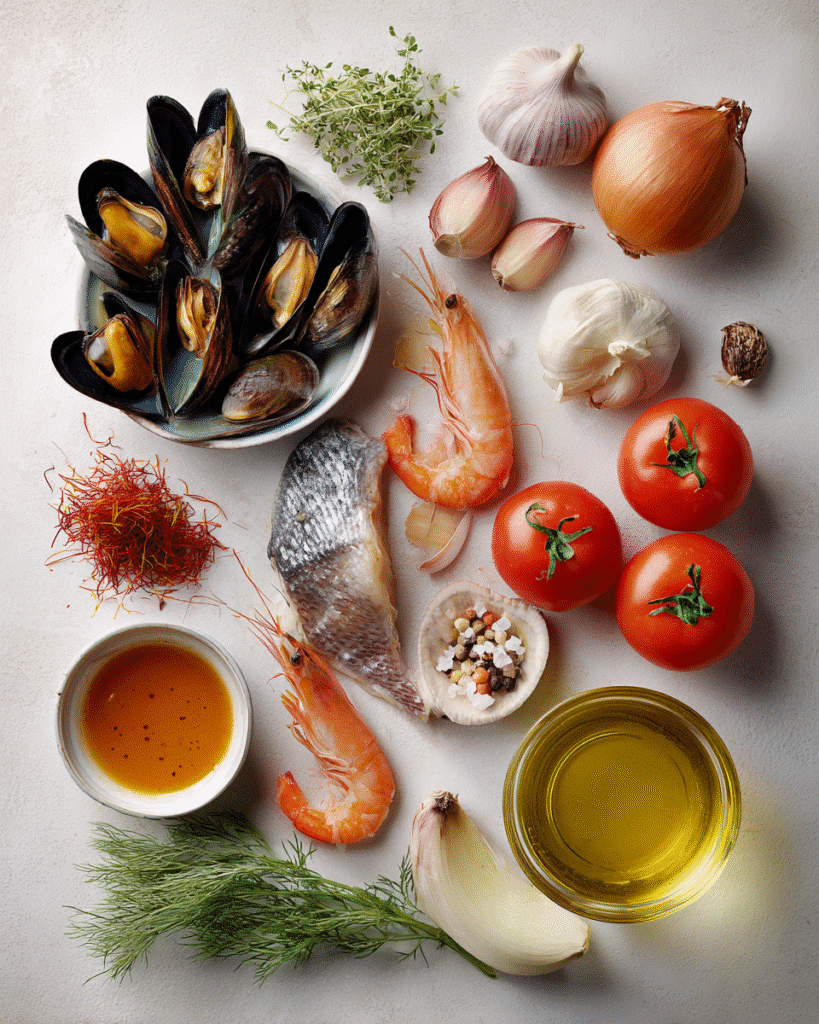
Proper preparation of your seafood is crucial for bouillabaisse success. Clean shellfish thoroughly under cold running water, removing beards from mussels and sand from clams. For whole fish, scale, gut, and cut into portions. Leave the heads and bones for the broth—they’ll add tremendous flavor.
Aromatics and Seasonings for Bouillabaisse
The soul of bouillabaisse lies in its aromatic base:
- Fennel bulb (thinly sliced)
- Leeks (white and light green parts only)
- Onions (yellow, finely chopped)
- Garlic (4-6 cloves, minced)
- Tomatoes (ripe, peeled and chopped)
- Orange zest (organic, without bitter pith)
- Saffron threads (crucial for authentic color and flavor)
- Bay leaves (2-3, preferably fresh)
- Thyme sprigs (4-5 stems)
Pantry Staples for Traditional Bouillabaisse
Beyond seafood and aromatics, you’ll need:
- High-quality olive oil (preferably from Provence)
- Fish stock (homemade if possible)
- White wine (dry, like Vermouth or Sauvignon Blanc)
- Pastis or Pernod (optional but traditional)
- Sea salt and freshly ground black pepper
For an extensive collection of French and Mediterranean recipes, check out our curated recipe selections that pair perfectly with this bouillabaisse.
Step-by-Step Bouillabaisse Cooking Instructions
Pre-Cooking Seafood Prep for Bouillabaisse
- Clean all shellfish thoroughly and check for any that are damaged or open (discard these)
- Cut firm white fish into 2-inch chunks
- Pat all seafood dry with paper towels
- Season lightly with salt and set aside while preparing the broth
- Prepare your aromatic vegetables (chop onions, leek, fennel, garlic)
Cooking Method for Traditional Bouillabaisse
- In a large Dutch oven or stockpot, heat 3 tablespoons olive oil over medium heat
- Add onions, leeks, and fennel; sauté until soft and translucent (about 5 minutes)
- Add garlic and cook until fragrant (30 seconds)
- Stir in tomatoes and cook until they begin to break down (3-4 minutes)
- Add orange zest, saffron, bay leaves, and thyme
- Pour in fish stock and bring to a simmer
- Add firm white fish pieces first and simmer for 2 minutes
- Add shellfish (clams, mussels) and continue cooking 3-4 minutes
- Finally, add quick-cooking seafood (shrimp, squid) and simmer just until cooked through
Doneness Check for Seafood in Bouillabaisse
The key to perfect bouillabaisse is not overcooking the seafood:
- Fish is done when it flakes easily but isn’t falling apart
- Shellfish like clams and mussels are ready when their shells open fully
- Shrimp turn pink and curl slightly when properly cooked
- The broth should be aromatic and slightly thickened from the seafood
Resting and Serving Bouillabaisse
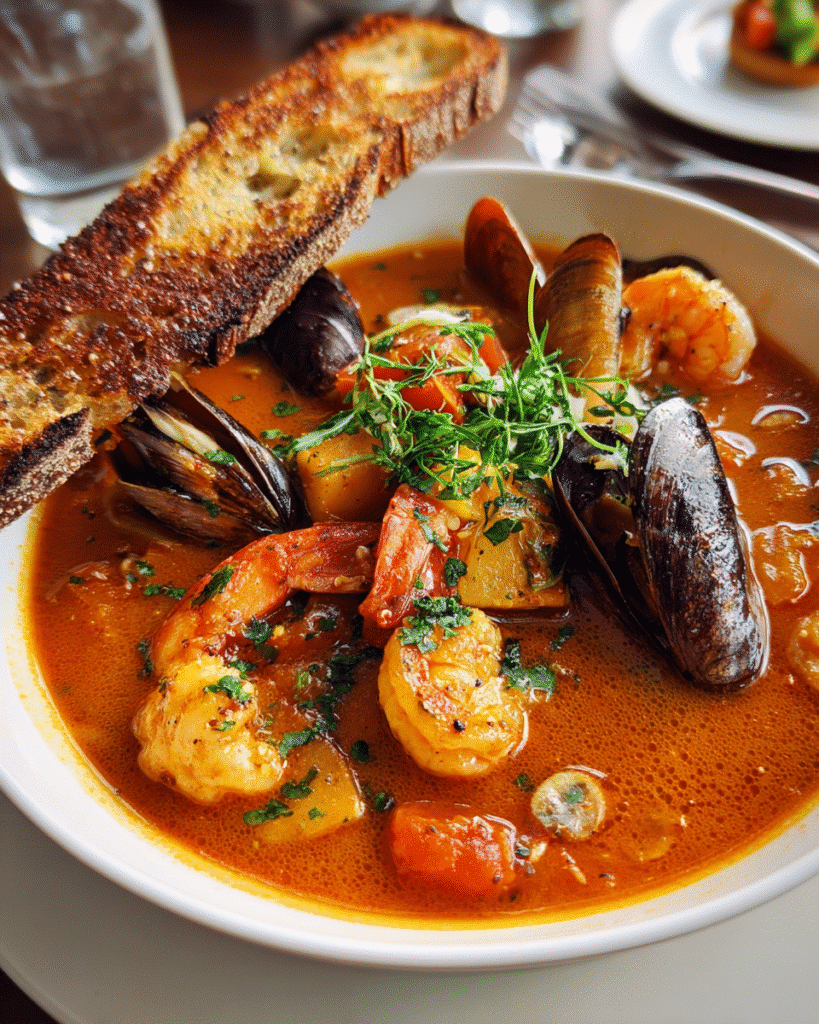
Allow your completed bouillabaisse to rest covered for 5 minutes before serving. This allows the flavors to meld and the seafood to finish cooking gently in the residual heat. Traditional serving includes placing the seafood on a platter and the broth in a separate tureen, though modern presentations often combine them in wide, shallow bowls.
Pro Tips for Perfect Bouillabaisse Seafood Stew
Avoiding Common Bouillabaisse Mistakes
- Don’t overcook the seafood—add ingredients in stages based on cooking time
- Never boil the broth vigorously—a gentle simmer preserves delicate flavors
- Resist the urge to add too many herbs—let the seafood shine
- Don’t skip the saffron—it’s essential for authentic flavor and color
Tool Recommendations for Bouillabaisse Success
- Large, heavy-bottomed Dutch oven or stockpot
- Long-handled wooden spoon for stirring without breaking fish pieces
- Fish spatula for carefully transferring delicate seafood
- Cheesecloth for making an herb sachet (bouquet garni)
- Ladle specifically for serving broth
Storage & Reheating Bouillabaisse
Bouillabaisse is best enjoyed fresh, but if you must store leftovers:
- Refrigerate seafood and broth separately
- Consume within 2 days
- Reheat broth gently until hot, then add seafood just to warm through
- Never boil when reheating as this will toughen the seafood
Looking for more seafood recipe inspiration? Browse our Pinterest collection featuring stunning seafood creations from around the world.
Flavor Variations for Bouillabaisse Seafood Stew
Mediterranean Regional Bouillabaisse Variations
- Marseille-Style: The classic version with rouille sauce and crusty bread
- Spanish-Influenced: Add saffron and smoked paprika for a deeper flavor
- Italian Twist: Incorporate fennel seeds and a splash of Sambuca
Modern Bouillabaisse Adaptations
- Light Version: Use less oil and add more fresh herbs and citrus
- Spicy Variation: Add chili flakes or a small hot pepper for heat
- Asian-Inspired: Include lemongrass, ginger, and a touch of fish sauce
Dietary Modifications for Bouillabaisse
| Dietary Need | Substitutions | Flavor Adjustments |
|---|---|---|
| Gluten-Free | Skip flour-thickened rouille, serve with GF bread | No changes needed |
| Dairy-Free | Use olive oil instead of butter for the rouille | Add extra herbs for richness |
| Low-Sodium | Reduce salt, use homemade unsalted stock | Increase herbs and spices |
| Pescatarian | Standard bouillabaisse is naturally pescatarian | No changes needed |
Serving Suggestions for Bouillabaisse Seafood Stew
- Traditional accompaniments include crusty bread rubbed with garlic and rouille (saffron-garlic mayo)
- Serve with a simple green salad dressed with lemon and olive oil
- A chilled crisp white wine like Picpoul de Pinet or dry rosé from Provence
- Provide small forks or picks for shellfish and soup spoons for the broth
- Offer finger bowls with water and lemon for cleaning hands after eating shellfish
FAQs About Bouillabaisse Seafood Stew
Can I make bouillabaisse ahead of time?
You can prepare the broth a day ahead, but add the seafood only shortly before serving to prevent overcooking.
What’s the difference between bouillabaisse and other fish stews?
Authentic bouillabaisse contains specific Mediterranean fish varieties, saffron, and follows a traditional preparation method from Provence. It’s typically served with rouille sauce.
Is it necessary to make fish stock from scratch?
While homemade stock provides the best flavor, high-quality store-bought fish or seafood stock makes a good substitute when time is limited.
Can I use frozen seafood for bouillabaisse?
Yes, but results will be best if you thaw completely, pat dry, and adjust cooking times accordingly. Fresh seafood is always preferable.
What’s the best way to serve the rouille sauce?
Traditionally, rouille is spread on toasted bread slices (croûtes) which are either placed in the bowl before ladling the broth or served alongside.
Conclusion
Mastering bouillabaisse is truly a culinary achievement worth celebrating. This iconic Provençal seafood stew represents the perfect harmony of fresh seafood, aromatic herbs, and Mediterranean tradition. By following these authentic techniques and embracing the flexibility inherent in this classic recipe, you’ll create a memorable dish that transports diners straight to the sunny coasts of southern France.
Don’t be intimidated by its reputation—bouillabaisse is essentially a fisherman’s stew at heart, meant to use the day’s catch with simple, flavorful ingredients. Start with fresh seafood, take your time developing the broth’s flavor, and serve with love. Your bouillabaisse journey awaits!