
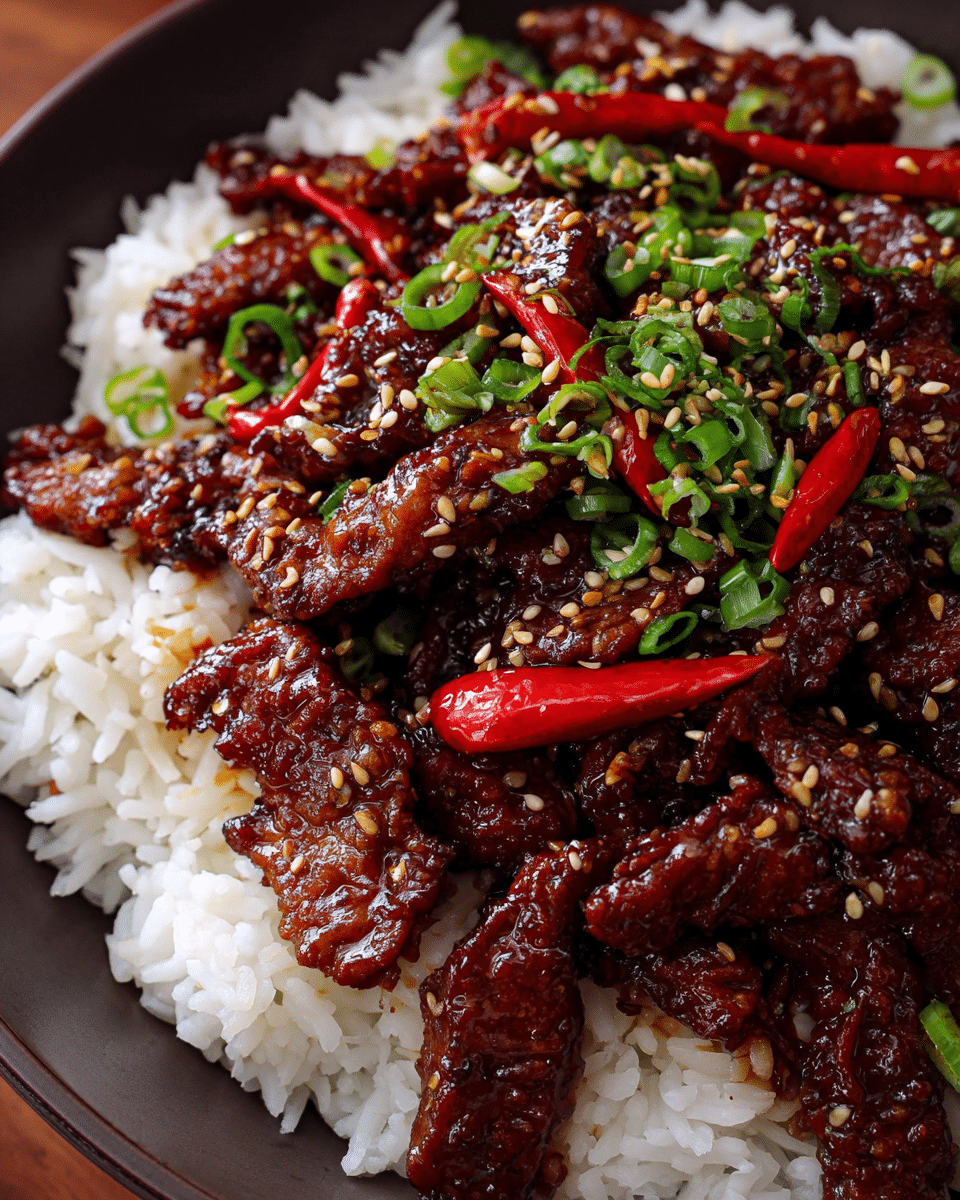
Tired of bland stir-fry dishes that leave your taste buds underwhelmed? Discover how Mongolian Beef has risen from humble origins to become one of the most craved comfort foods in America. This savory, slightly sweet dish delivers tender slices of beef in a rich, glossy sauce that clings perfectly to every grain of rice. Whether you’re a weeknight warrior or weekend chef, this guide will walk you through selecting the perfect cut, creating that signature sauce, and mastering the high-heat cooking method that makes Mongolian Beef irresistible. Read on for meat selection tips, cooking hacks, and answers to your most pressing questions about this beloved dish.
Why This Mongolian Beef Recipe Works
- Uses affordable, easy-to-find cuts of beef like flank or skirt steak
- Requires just 15 minutes of marinating for remarkably tender meat
- Perfect for weeknights when you need dinner on the table in under 30 minutes
- Delivers restaurant-quality flavor with simple pantry ingredients
- Easily customizable to your preferred spice level
Choosing the Right Meat for Mongolian Beef
Best Cuts for Mongolian Beef
Mongolian Beef traditionally calls for thin slices of beef that can cook quickly while remaining tender. Flank steak is the gold standard, offering the perfect balance of flavor and texture. Skirt steak makes an excellent alternative with its rich, beefy flavor. In a pinch, sirloin can work too, though it lacks some of the characteristic chew that makes authentic Mongolian Beef so satisfying.
Buying Tips
Look for meat with good marbling throughout—those thin white streaks of fat ensure flavor and tenderness. For flank steak, choose pieces with bright red color and minimal surface fat. Ask your butcher to slice the meat against the grain if you’re not confident doing it yourself, or partially freeze the beef at home for easier thin slicing.
Substitutions
If beef isn’t an option, thinly sliced chicken thighs make a delicious variation called “Mongolian Chicken.” For plant-based alternatives, extra-firm tofu or seitan can absorb the flavorful sauce, though you’ll want to adjust cooking times accordingly.
Ingredients & Prep for Mongolian Beef
Meat Prep Essentials
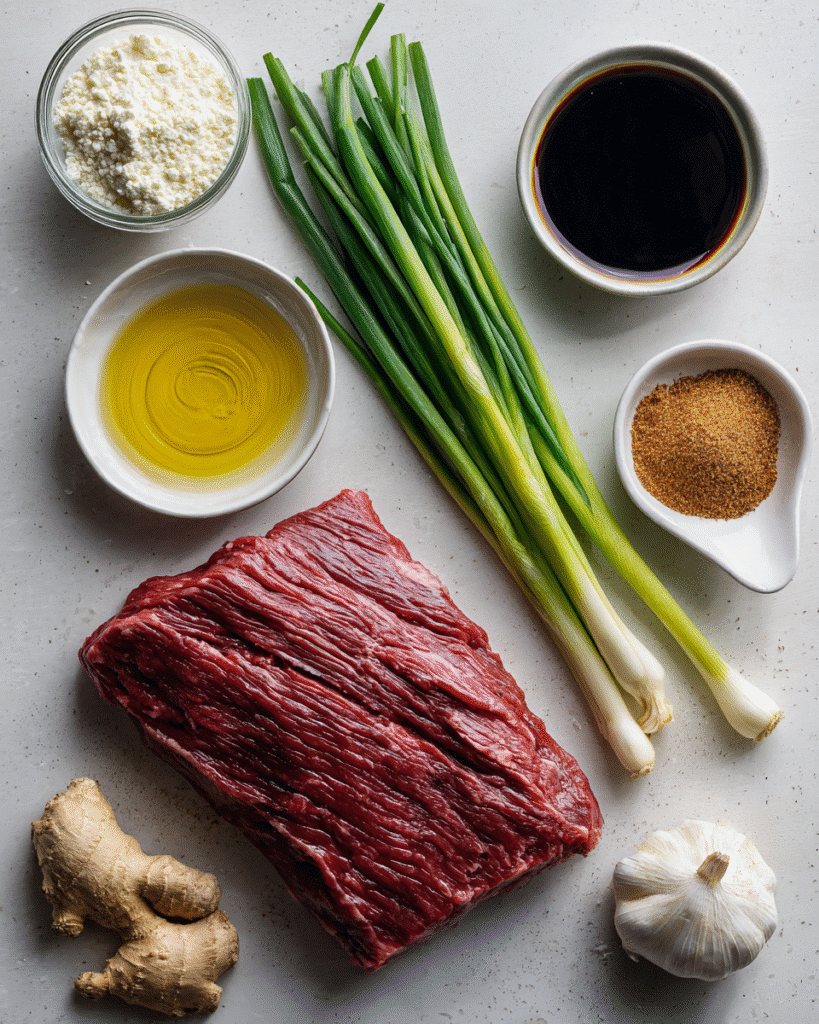
Before cooking, slice your beef against the grain into thin strips (about ⅛-inch thick). This cutting technique is crucial—it shortens the muscle fibers, ensuring tenderness even with quick-cooking. Pat the meat dry with paper towels to promote better browning, then toss with cornstarch to create that signature velvety texture found in restaurant-quality Mongolian Beef.
Marinades/Rubs
- 2 tablespoons soy sauce
- 1 tablespoon rice wine or rice vinegar
- 1 teaspoon cornstarch
- ½ teaspoon baking soda (the secret tenderizer!)
Mix these ingredients with your sliced beef and let sit for 15-30 minutes. The baking soda works magic on the meat’s texture while the soy sauce begins flavoring the protein.
Pantry Staples
The signature Mongolian Beef sauce requires dark brown sugar for caramelization, soy sauce for umami depth, and garlic and ginger for aromatic foundation. Keep these ingredients on hand, along with sesame oil for finishing and red pepper flakes for heat customization.
Step-by-Step Cooking Instructions for Mongolian Beef
Pre-Cooking Prep for Mongolian Beef
- Remove marinated beef from refrigerator 15 minutes before cooking to take the chill off
- Prepare all sauce ingredients and have them ready beside your cooking area
- Slice green onions and separate white parts (for cooking) from green parts (for garnish)
- Heat your wok or large skillet before adding any ingredients
Cooking Method for Mongolian Beef
- Heat 2 tablespoons of vegetable oil in a wok or large skillet over high heat until shimmering
- Add beef in a single layer (work in batches if needed) and sear for 1-2 minutes until edges brown
- Remove beef and set aside
- Reduce heat to medium, add garlic, ginger, and white parts of green onions, stirring for 30 seconds
- Pour in premixed sauce (soy sauce, brown sugar, water), bringing to a simmer
- Return beef to pan, tossing to coat for 1-2 minutes until sauce thickens
Doneness Check for Mongolian Beef
Unlike steaks, Mongolian Beef should be fully cooked through but still tender. The sauce should coat the back of a spoon and have a glossy appearance. If the sauce is too thin, simmer for an additional minute; if too thick, add a tablespoon of water.
Resting Mongolian Beef
While traditional resting isn’t necessary as with larger cuts, allowing the dish to sit for 2-3 minutes off heat helps the flavors meld and the sauce to further coat the meat. This brief rest makes a noticeable difference in the final taste experience.
Pro Tips for Perfect Mongolian Beef
Avoiding Tough Mongolian Beef
- Never overcrowd your pan—cook in batches to maintain high heat
- Slice meat against the grain and uniformly thin for even cooking
- Don’t overcook—beef needs just enough time to sear and warm through
- Use cornstarch to both tenderize the meat and thicken the sauce
Tool Recommendations
A carbon steel wok is ideal for achieving the proper “wok hei” (breath of the wok) flavor, but any large, heavy skillet will work. A sharp knife is essential for achieving those thin, even slices. Consider investing in a bench scraper to easily transfer cut ingredients to your hot pan.
Storage & Reheating
Store leftover Mongolian Beef in an airtight container for up to 3 days. When reheating, add a tablespoon of water to the dish and warm gently in a covered skillet. This prevents the sauce from reducing too much and keeps the meat tender. For the best flavor experience, discover more amazing Asian-inspired recipes on our Pinterest board where we share weekly cooking inspiration.
Flavor Variations for Mongolian Beef
Spicy Twist
For heat lovers, add sliced fresh chilies during cooking or increase the red pepper flakes. For a complex spicy flavor, incorporate a tablespoon of chili garlic sauce or gochujang. These additions transform the traditional dish into a fiery delight that still maintains the signature sweet-savory balance.
Keto/Paleo
Replace the brown sugar with monk fruit sweetener or coconut sugar for a lower-carb version. Use coconut aminos instead of soy sauce for a paleo-friendly alternative. These simple swaps maintain the essence of Mongolian Beef while accommodating dietary preferences.
Global Flavors
| Variation | Key Ingredients | Serving Suggestion |
|---|---|---|
| Korean-Inspired | Gochujang, pear juice | Serve with kimchi |
| Japanese Twist | Mirin, dashi | Garnish with shichimi togarashi |
| Thai-Style | Fish sauce, lime, Thai basil | Serve with cucumber salad |
| Chinese Five-Spice | Star anise, clove, cinnamon | Pair with steamed bok choy |
Serving Suggestions for Mongolian Beef
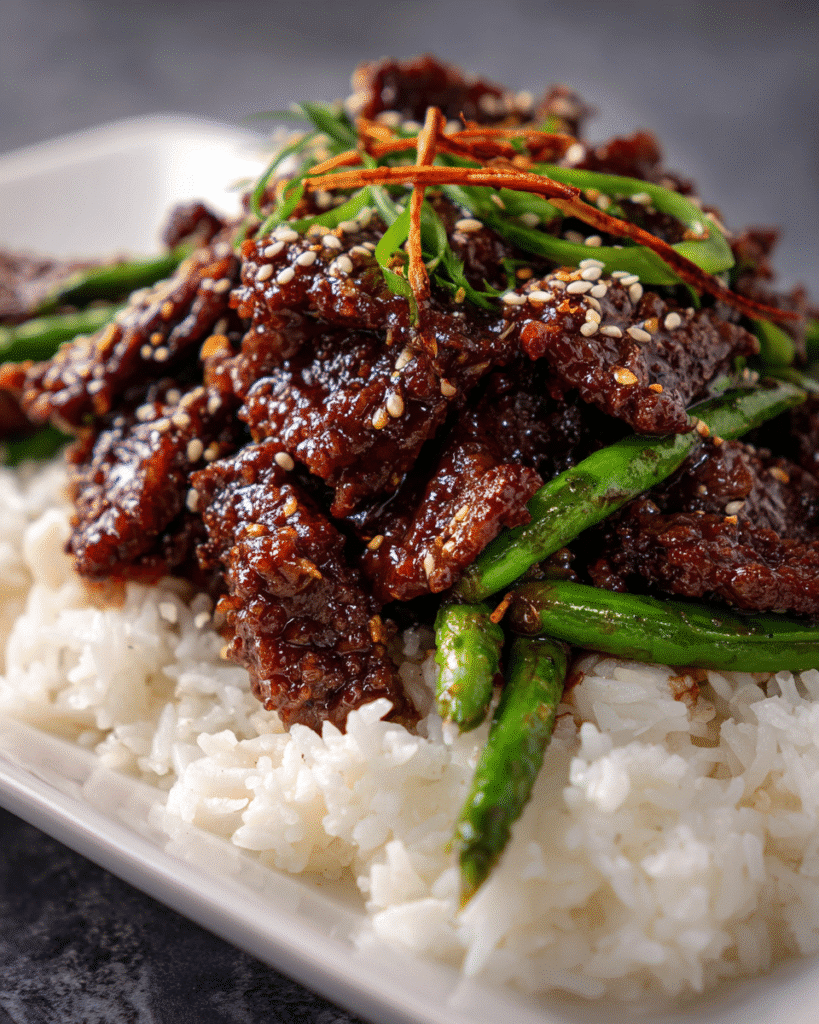
Traditionally, Mongolian Beef is served over steamed white rice, which provides the perfect canvas for the rich sauce. For a complete meal, pair with steamed broccoli or golden creamy scalloped potatoes for an East-meets-West fusion experience. For lighter options, serve in lettuce cups or alongside a crunchy Asian slaw dressed with rice vinegar and sesame oil.
For beverages, a cold lager beer complements the dish beautifully, cutting through the richness. Non-alcoholic options include jasmine tea or a ginger-lime sparkling water.
FAQs About Mongolian Beef
Can I make Mongolian Beef ahead of time?
Yes, but for best results, prepare the meat and sauce separately and combine them just before serving. The sauce can be made up to 3 days ahead and stored in the refrigerator. When ready to serve, quickly stir-fry the meat, then add the sauce to finish.
Is Mongolian Beef actually from Mongolia?
Despite its name, Mongolian Beef is not a traditional Mongolian dish. It was created in Chinese-American restaurants and has little connection to authentic Mongolian cuisine, which typically features less sauce and different cooking techniques.
How can I make my Mongolian Beef more tender?
The three secrets to tender Mongolian Beef are: slicing against the grain, using baking soda in the marinade, and cooking quickly over high heat. For extra tenderness, try the “velveting” technique by marinating the meat with cornstarch and egg white before cooking.
Can I use my slow cooker for Mongolian Beef?
While traditional Mongolian Beef relies on high-heat stir-frying, you can adapt it for a slow cooker. Use a thicker cut like chuck roast, brown the meat first, then cook on low for 6-8 hours. Add the sauce ingredients in the last 30 minutes for the best flavor profile.
Conclusion
Now you know why Mongolian Beef has captured the hearts (and appetites) of comfort food lovers everywhere. With its perfect balance of tender meat, savory-sweet sauce, and versatile serving options, it’s no wonder this dish has transcended its restaurant origins to become a beloved home-cooking staple. Fire up your wok tonight and experience the magic for yourself!
Join the thousands of home cooks who have mastered this dish and made it part of their regular rotation. Once you’ve perfected Mongolian Beef, expand your culinary horizons with our Mediterranean Grilled Chicken Recipe or explore our complete collection of globally-inspired dishes at RecipesFoody.
Print
How Mongolian Beef Became the Ultimate Comfort Food Sensation
- Total Time: 25 mins
- Yield: 4 servings 1x
Description
This Mongolian Beef is tender, saucy, and bursting with sweet-salty flavor — the ultimate comfort food that’s taken the world by storm. With caramelized beef, rich soy-garlic sauce, and a hint of spice, it’s a restaurant classic made easy at home.
Ingredients
1 lb flank steak, thinly sliced against the grain
1/4 cup cornstarch
2 tbsp vegetable oil
3 cloves garlic, minced
1 tsp grated fresh ginger
1/2 cup soy sauce
1/2 cup brown sugar
1/4 cup water
1 tsp sesame oil
1/4 tsp red pepper flakes (optional)
3 green onions, cut into 2-inch pieces
Cooked jasmine rice, for serving
Instructions
1. Pat the sliced beef dry with paper towels, then toss with cornstarch until evenly coated. Shake off excess.
2. Heat vegetable oil in a large skillet or wok over medium-high heat.
3. Cook beef in batches for 1–2 minutes per side until browned and crisp at the edges. Remove and set aside.
4. In the same pan, add garlic and ginger. Stir-fry for 30 seconds until fragrant.
5. Pour in soy sauce, brown sugar, water, and sesame oil. Stir and bring to a gentle boil.
6. Add red pepper flakes for heat if desired.
7. Return beef to the pan and toss to coat in the sauce. Cook for 2–3 minutes until thickened and glossy.
8. Add green onions and toss briefly before removing from heat.
9. Serve immediately over steamed rice, spooning extra sauce over the top.
Notes
Slice beef thinly for maximum tenderness — partially freezing makes it easier.
Don’t overcrowd the pan; sear beef in small batches for crisp edges.
Add broccoli or snap peas for a veggie-packed version.
Use low-sodium soy sauce to balance sweetness.
Leftovers reheat beautifully and taste even better the next day!
- Prep Time: 10 mins
- Cook Time: 15 mins
- Category: Dinner
- Method: Stir-Fry
- Cuisine: Asian-Inspired
Nutrition
- Serving Size: 1 bowl
- Calories: 460
- Sugar: 20g
- Sodium: 810mg
- Fat: 20g
- Saturated Fat: 5g
- Unsaturated Fat: 14g
- Trans Fat: 0g
- Carbohydrates: 38g
- Fiber: 1g
- Protein: 36g
- Cholesterol: 90mg