
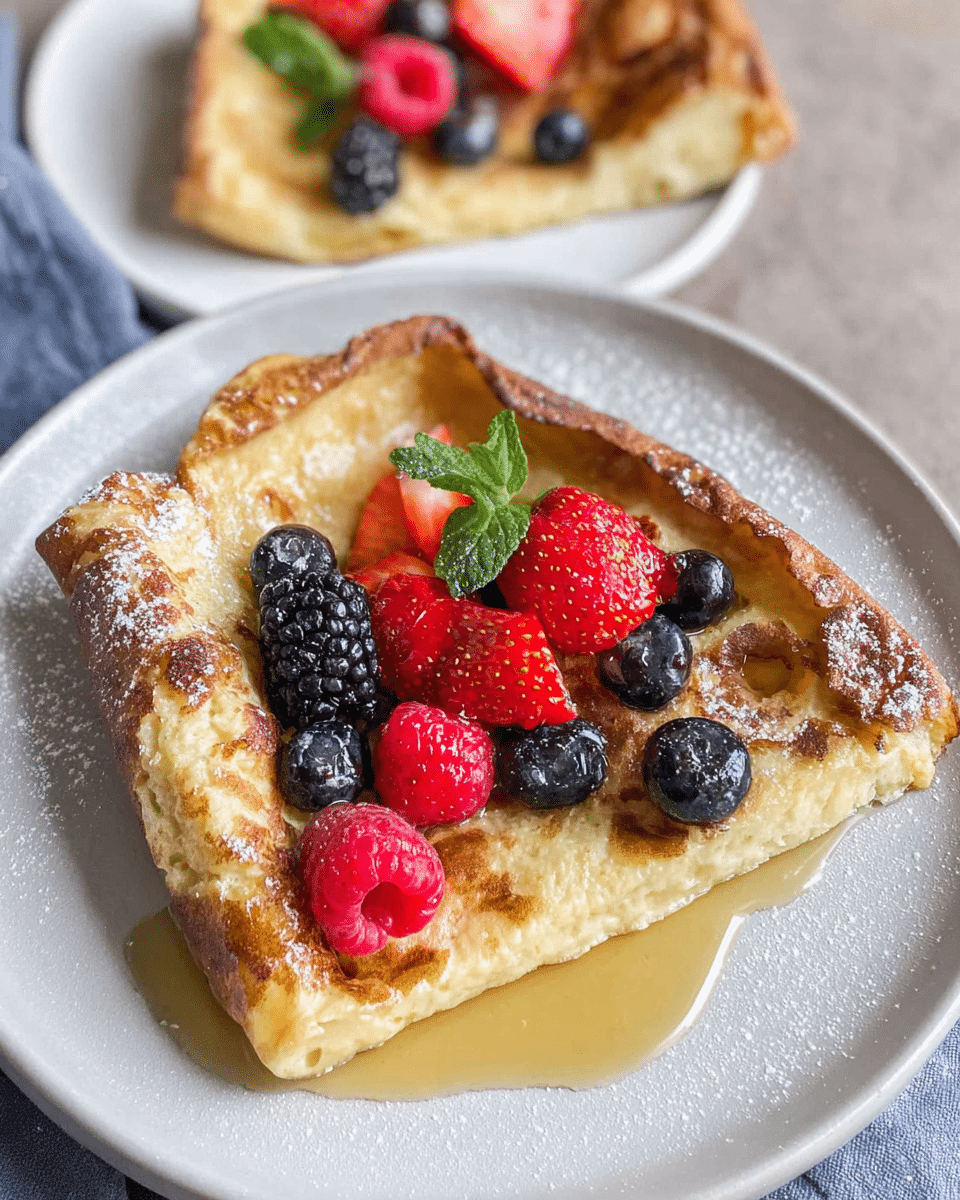
Tired of the same old boring breakfast routine? That stack of regular pancakes just isn’t cutting it anymore, is it? Enter the German pancake—a spectacular, puffy masterpiece that rises to glorious heights in your oven and collapses into a delicious cradle for your favorite toppings.
This German pancake recipe promises a show-stopping breakfast centerpiece that’s deceptively simple to make. Unlike traditional pancakes that require flipping and constant attention, German pancakes bake themselves to golden perfection while you sip your morning coffee.
In this guide, you’ll discover everything from selecting the perfect pan for maximum rise to creative topping combinations that will make your taste buds dance. We’ll cover foolproof techniques, common mistakes to avoid, and how to achieve that Instagram-worthy puff every single time.
Why This German Pancake Recipe Works
- Uses basic pantry ingredients you already have on hand
- Requires only 5 minutes of hands-on preparation
- Creates a dramatic presentation with minimal effort
- Offers a versatile canvas for sweet or savory toppings
- Serves the whole family from just one pan
- Delivers a delightfully eggy, tender texture with crispy edges
Choosing the Right Pan for German Pancake Success
Cast Iron: The Gold Standard
A well-seasoned 10-12 inch cast iron skillet is the traditional choice for German pancakes. The heavy material retains heat perfectly, creating that signature dramatic rise and crispy edge. If you’re looking for the most authentic German pancake experience, cast iron is your best friend.
Alternative Pans for German Pancakes
Don’t have cast iron? An oven-safe stainless steel skillet or glass pie dish can work in a pinch. The rise won’t be quite as dramatic, but you’ll still get delicious results. Avoid non-stick pans—they don’t typically heat to the high temperatures needed for the ideal German pancake puff.
Size Considerations
For a thicker, more custardy German pancake, choose a smaller pan (9-10 inches). For a thinner, crisper result, go with a larger pan (12-14 inches). Remember that the batter should be about half an inch deep before baking for optimal texture.
German Pancake Ingredients & Prep
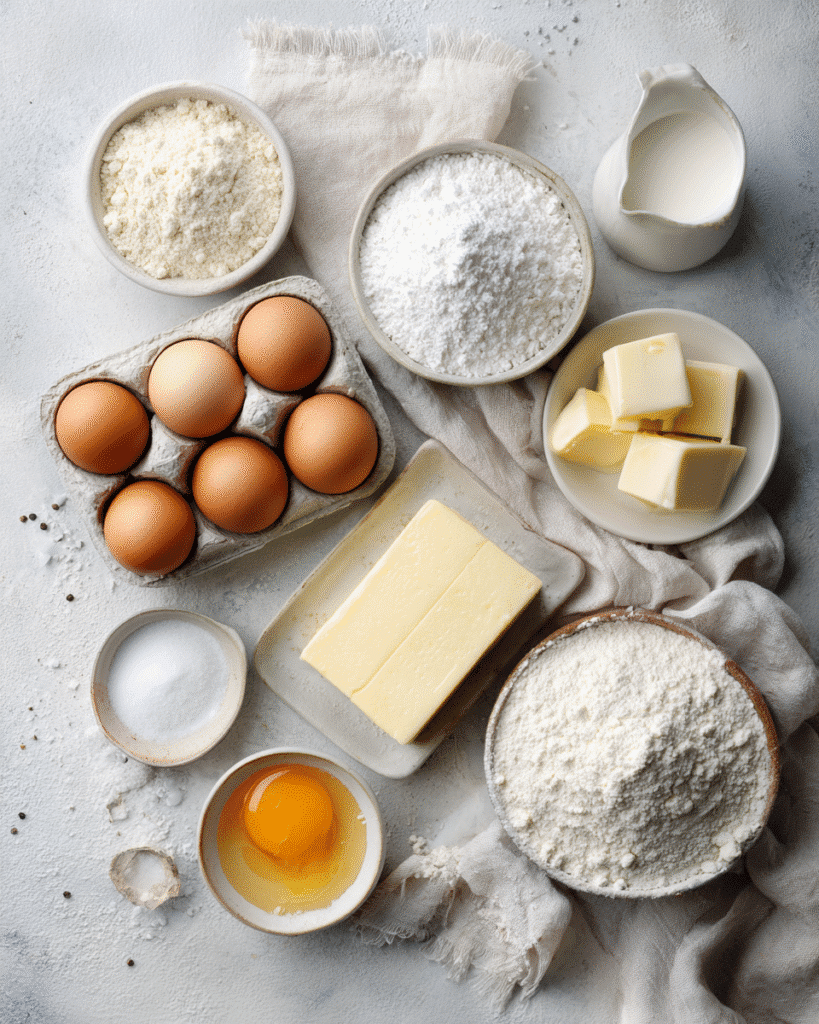
Batter Basics
- Eggs – Room temperature for maximum volume
- Milk – Whole milk creates the richest texture
- Flour – All-purpose works perfectly
- Salt – Just a pinch enhances flavor
- Vanilla extract – Optional but adds lovely depth
- Butter – For the pan, creating a rich foundation
Room Temperature Matters
For the puffiest German pancake, bring eggs and milk to room temperature before mixing. Cold ingredients won’t incorporate as much air, resulting in a flatter pancake.
Mixing Technique
While some recipes call for a blender, a simple whisk works beautifully for German pancake batter. The key is not overmixing—a few small lumps are actually perfect for creating that characteristic texture.
Looking for more amazing breakfast inspirations? Check out our Avocado Toast with Egg Recipe for another quick morning option!
Step-by-Step German Pancake Cooking Instructions
Pre-Cooking German Pancake Prep
- Preheat your oven to 425°F (220°C) with the pan inside
- Allow eggs and milk to reach room temperature
- Whisk eggs until frothy, then add milk, vanilla, and salt
- Gradually add flour, whisking until just combined
- Let batter rest for 10 minutes while oven preheats
German Pancake Baking Method
- Carefully remove hot pan from oven
- Add butter and swirl until melted and bubbly
- Pour batter into hot pan (listen for that satisfying sizzle!)
- Immediately return to oven without disturbing
- Bake for 20-25 minutes until dramatically puffed and golden brown
German Pancake Doneness Check
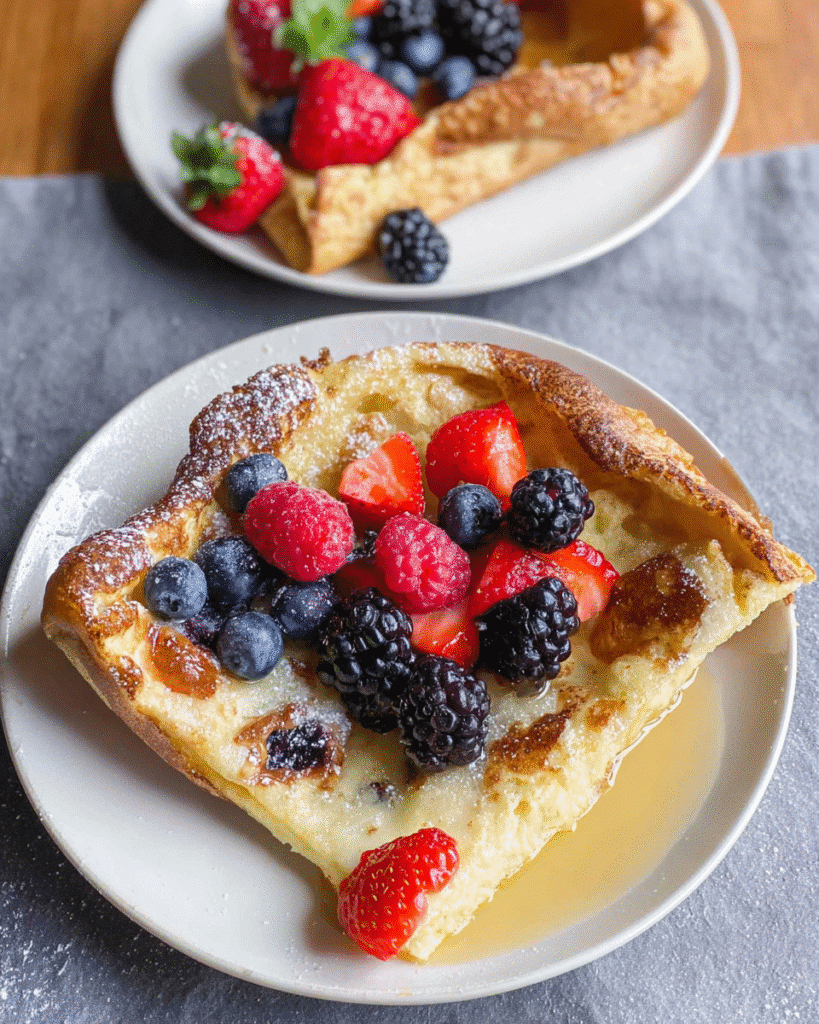
Your German pancake is ready when the edges are deeply golden and have climbed up the sides of the pan. The center should be set but slightly custardy. Don’t be alarmed when it begins to deflate after removing from the oven—this is normal and creates the perfect crater for toppings.
Serving Your German Pancake
Serve immediately for maximum drama! The pancake will begin deflating within minutes of leaving the oven. Have your toppings ready to go, and bring the entire pan to the table for a showstopping presentation.
After mastering German pancakes, why not try your hand at our Fluffy Buttermilk Pancakes for a delicious comparison?
Pro Tips for Perfect German Pancake Results
Avoiding German Pancake Pitfalls
- Secret #1: Never open the oven door during baking—the sudden temperature change will cause your pancake to fall
- Secret #2: Make sure your pan is screaming hot before adding batter
- Secret #3: Don’t skimp on the butter—it creates those irresistible crispy edges
German Pancake Tool Recommendations
- Digital oven thermometer for accurate temperature
- Silicone whisk to prevent overmixing
- Well-seasoned cast iron skillet for optimal results
- Microplane for perfect citrus zest garnish
Storage & Reheating German Pancakes
While German pancakes are best enjoyed immediately, leftovers can be stored in the refrigerator for up to 2 days. Reheat briefly in a 350°F oven for 5 minutes to restore some crispness. Note that you’ll never recapture the original puffiness, but the flavor remains delicious.
German Pancake Flavor Variations
Seasonal German Pancake Inspirations
- Spring: Lemon curd and fresh berries
- Summer: Sliced peaches with honey
- Fall: Caramelized apples with cinnamon
- Winter: Cranberry compote with orange zest
Dietary Adaptations for German Pancakes
- Gluten-Free: Substitute your favorite cup-for-cup gluten-free flour blend
- Dairy-Free: Use plant-based milk and coconut oil instead of butter
- Lower-Carb: Reduce flour by 25% for a more eggy, custard-like result
Check out our collection of breakfast recipes on Pinterest for more morning inspiration that will transform your breakfast routine!
International German Pancake Variations
| Country | Variation Name | Key Ingredients | Special Notes |
|---|---|---|---|
| Netherlands | Dutch Baby | Lemon and powdered sugar | Often served as dessert |
| Finland | Pannukakku | Cardamom spice | Typically topped with berries |
| Japan | Fuwa Fuwa | Meringue-based | Extra fluffy texture |
| Sweden | Ugnspannkaka | Often includes bacon bits | More savory version |
| France | Clafoutis | Fresh cherries | Dessert variation |
German Pancake Serving Suggestions
- Classic toppings: Powdered sugar and fresh lemon juice
- Fruit forward: Maple syrup with fresh berries or caramelized bananas
- Decadent option: Nutella with toasted hazelnuts and whipped cream
- Savory twist: Sautéed mushrooms, herbs, and gruyère cheese
- Brunch spread: Serve alongside scrambled eggs and fresh fruit for a complete meal
For a sweet breakfast alternative, our Strawberry Banana Bread Vegan Recipe makes a wonderful companion to German pancakes!
German Pancake FAQs
Q: Why didn’t my German pancake puff up?
A: The most common culprits are a pan that wasn’t hot enough, opening the oven door during baking, or using cold ingredients. Room temperature eggs and milk make a huge difference!
Q: Can I make the batter ahead of time?
A: You can refrigerate the batter for up to 2 hours, but bring it back to room temperature before baking for the best rise.
Q: How is a German pancake different from regular pancakes?
A: German pancakes are baked rather than cooked on a stovetop, contain a higher ratio of eggs, and puff dramatically during cooking before collapsing.
Q: Can I make mini German pancakes?
A: Absolutely! Divide the batter between well-buttered muffin tins for adorable individual servings. Reduce baking time to about 15 minutes.
If you enjoy this recipe, you’ll love our No-Knead Cranberry Walnut Bread for another easy but impressive breakfast option!
Conclusion
The German pancake is more than just breakfast—it’s morning entertainment, a conversation starter, and a delicious tradition worth adopting. This magical dish transforms simple pantry staples into a spectacular culinary experience with minimal effort.
Whether you’re serving a lazy weekend brunch or surprising your family on a special morning, German pancakes bring the wow-factor every time. The versatility of this dish means you’ll never tire of it—switch up your toppings seasonally and watch as everyone gathers around the table with excitement.
Ready to expand your breakfast repertoire? Try our No-Knead Rosemary Cranberry Bread or Heavenly Red Velvet Cinnamon Rolls for more morning magic!
Print
How German Pancake Magic Transforms Your Breakfast Game
- Total Time: 25 mins
- Yield: 4 servings 1x
- Diet: Vegetarian
Description
German Pancakes — also known as Dutch Babies — are the breakfast showstopper you didn’t know you needed! Light, airy, and magically puffed in the oven, this golden pancake transforms simple ingredients into a stunning and delicious centerpiece that elevates your morning routine.
Ingredients
3 large eggs
1/2 cup all-purpose flour
1/2 cup milk
2 tbsp granulated sugar
1/2 tsp vanilla extract
1/4 tsp salt
2 tbsp unsalted butter
Powdered sugar, fresh berries, or lemon wedges (for serving)
Instructions
1. Preheat oven to 425°F (220°C).
2. Place butter in a 10-inch oven-safe skillet or baking dish and place in the oven to melt while it preheats.
3. In a blender, combine eggs, flour, milk, sugar, vanilla, and salt. Blend until smooth and frothy.
4. Carefully remove the hot skillet from the oven and swirl the melted butter to coat the bottom and sides.
5. Pour the batter immediately into the hot pan and return to the oven.
6. Bake for 18–20 minutes, or until the pancake is puffed and golden brown around the edges.
7. Remove from oven and let deflate slightly (it will fall as it cools — that’s normal!).
8. Dust generously with powdered sugar and serve with fresh berries, lemon juice, or maple syrup.
Notes
Use room-temperature eggs and milk for maximum puff.
For extra flavor, add a sprinkle of cinnamon or nutmeg to the batter.
Make it savory by skipping the sugar and topping with ham and cheese.
Perfect for brunch — doubles easily for a crowd and pairs beautifully with coffee or mimosas!
- Prep Time: 5 mins
- Cook Time: 20 mins
- Category: Breakfast
- Method: Baking
- Cuisine: German
Nutrition
- Serving Size: 1 slice
- Calories: 210
- Sugar: 7g
- Sodium: 150mg
- Fat: 11g
- Saturated Fat: 6g
- Unsaturated Fat: 5g
- Trans Fat: 0g
- Carbohydrates: 18g
- Fiber: 0g
- Protein: 8g
- Cholesterol: 145mg