
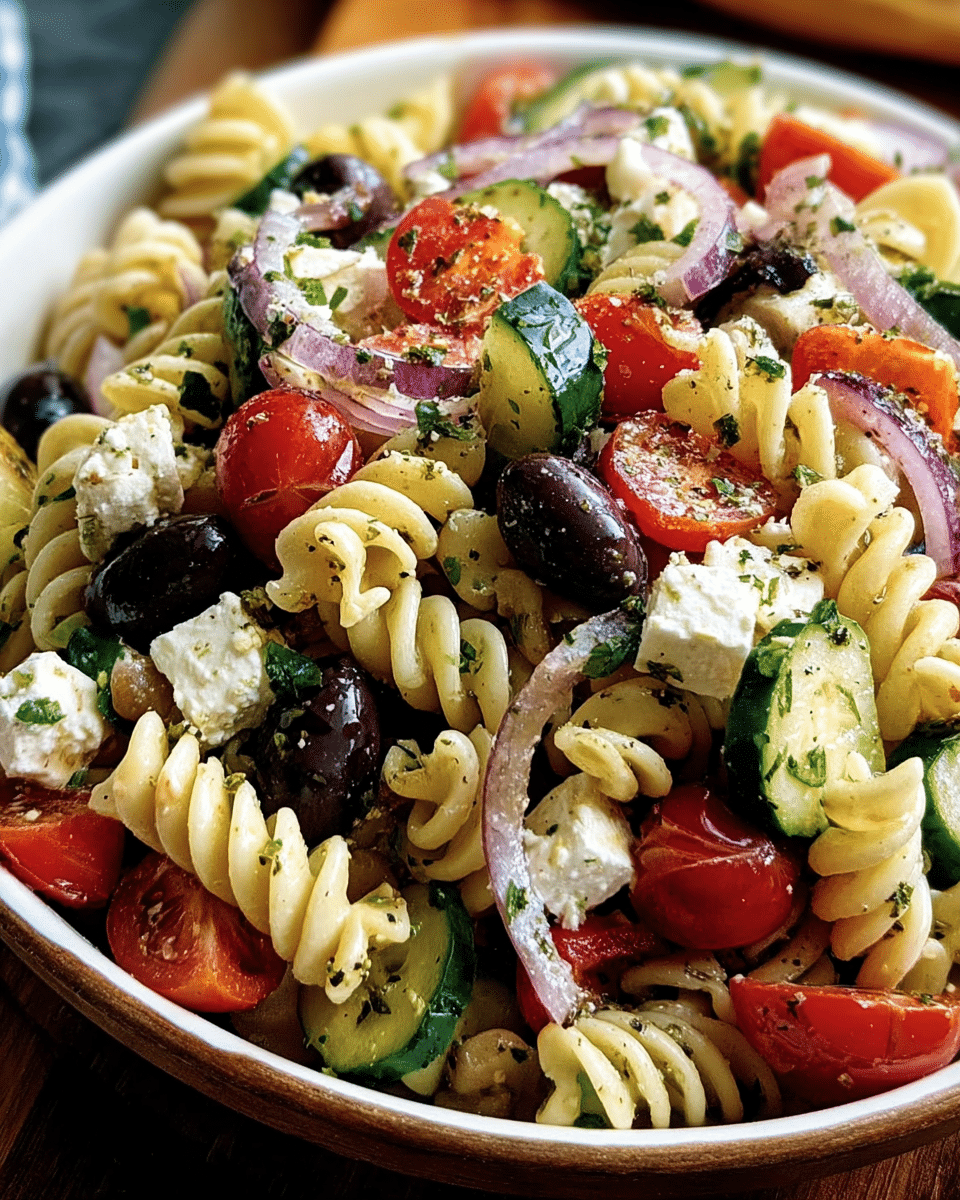
Tired of bland, soggy pasta salads that disappoint at every potluck? I’ve been there too! This Classic Greek Pasta Salad recipe transforms ordinary ingredients into a Mediterranean masterpiece that tastes like it came straight from a seaside taverna. As a food enthusiast who’s spent countless summers perfecting the balance of briny olives, tangy feta, and al dente pasta, I’ve finally cracked the code to restaurant-quality Greek pasta salad that maintains its vibrant flavors and textures.
Hi! I’m Emily, the creator behind Bikren Cook, and my love affair with Greek pasta salad began during a cooking workshop in Santorini. That experience taught me that the magic isn’t just in the ingredients—it’s in the techniques and little-known secrets that elevate this humble dish. In this guide, I’ll share everything from selecting the perfect pasta to my special dressing formula, troubleshooting tips, and creative variations that will make this your signature dish for years to come.
Why This Classic Greek Pasta Salad Recipe Works
- Uses everyday Mediterranean ingredients that create extraordinary flavor combinations
- Quick 30-minute prep that tastes like it took hours
- Perfect make-ahead dish that actually improves overnight
- Versatile enough for casual lunches or impressive dinner parties
- Balanced nutrition with protein, vegetables, and heart-healthy olive oil
Choosing the Right Ingredients for Classic Greek Pasta Salad
Best Pasta Shapes for Greek Pasta Salad
The foundation of any great Greek pasta salad starts with the right pasta. Rotini and fusilli are ideal because their spirals capture the dressing in every bite. Farfalle (bow ties) and penne also work beautifully, creating pockets for the smaller ingredients to nestle into. Always choose a quality pasta made from durum wheat for that authentic Mediterranean texture that holds up well to the dressing.
Fresh vs. Pantry Ingredients
The beauty of Classic Greek Pasta Salad lies in the balance of fresh and pantry staples:
Fresh Must-Haves:
- English or Persian cucumbers (less watery than regular)
- Cherry tomatoes (they hold their shape better than diced larger tomatoes)
- Red onion (for that distinctive sharpness)
- Fresh herbs (oregano, dill, and mint make all the difference)
Quality Pantry Staples:
- Kalamata olives (authentic and more complex than black olives)
- Artichoke hearts (jarred in water, not marinated for cleaner flavor)
- Good quality feta (preferably Greek, sold in blocks, not pre-crumbled)
Substitutions and Alternatives
Creating the perfect Classic Greek Pasta Salad doesn’t mean being rigid! For a gluten-free version, try chickpea pasta or rice pasta. Dairy-free? Substitute feta with firm tofu marinated in lemon juice, olive oil, and nutritional yeast. Low-carb enthusiasts can replace half the pasta with cauliflower florets for a lighter option without sacrificing the Mediterranean experience.
Looking for another Mediterranean-inspired appetizer? Check out my Three Cheese Tomato Bruschetta Dip for a perfect starter before serving this salad!
Ingredients & Prep for Classic Greek Pasta Salad
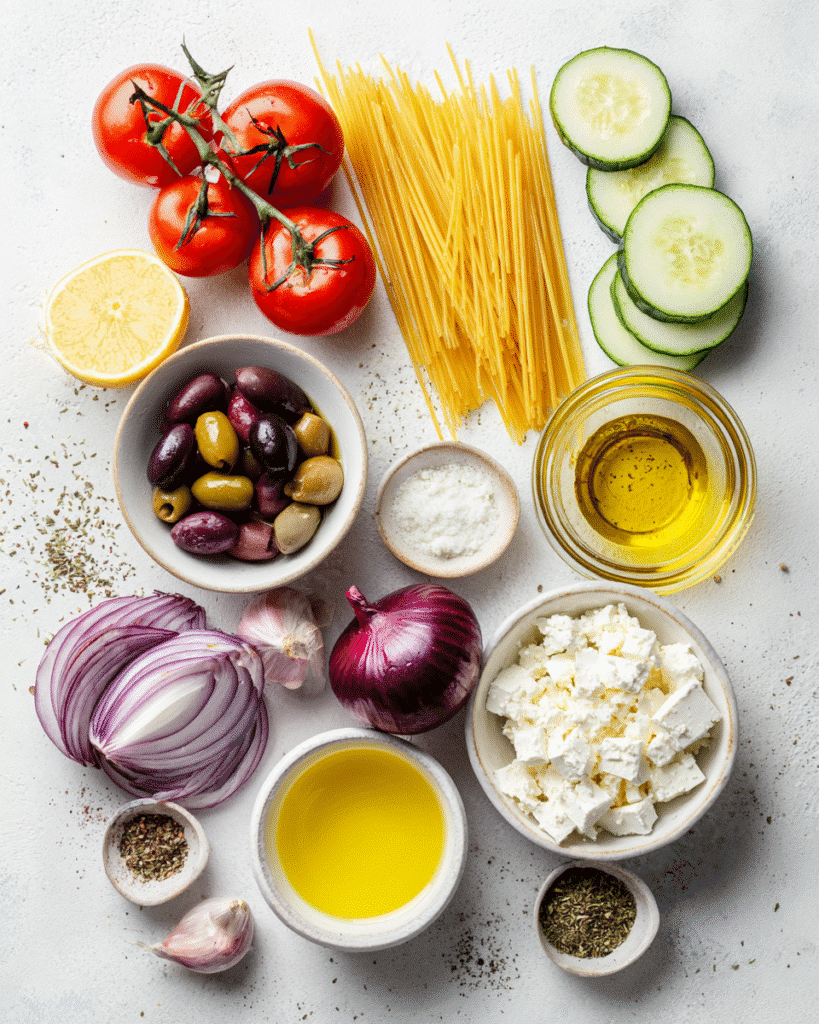
Pasta Prep Essentials
- 12 oz (340g) rotini or penne pasta
- 1 tablespoon salt (for pasta water)
- Ice bath (for shocking pasta after cooking)
The Perfect Greek Dressing
- ⅓ cup extra virgin olive oil (use the good stuff here!)
- 3 tablespoons red wine vinegar
- 1 tablespoon fresh lemon juice
- 2 cloves garlic, minced
- 1 teaspoon dried oregano
- ½ teaspoon dried basil
- 1 teaspoon honey or sugar
- ¾ teaspoon salt
- ½ teaspoon freshly ground black pepper
Fresh Salad Components
- 1 English cucumber, diced
- 1 pint cherry tomatoes, halved
- 1 red bell pepper, diced
- ½ red onion, thinly sliced
- ¾ cup kalamata olives, pitted and halved
- ½ cup artichoke hearts, quartered
- 6 oz (170g) feta cheese, cubed
- ¼ cup fresh parsley, chopped
- 2 tablespoons fresh dill, chopped
Step-by-Step Cooking Instructions for Classic Greek Pasta Salad
Pre-Cooking Prep for Classic Greek Pasta Salad
- Bring a large pot of water to a rolling boil and add 1 tablespoon salt.
- Meanwhile, prepare an ice bath in a large bowl.
- Chop all vegetables and herbs, keeping them uniform in size (about ½-inch pieces).
- Whisk all dressing ingredients in a small bowl or mason jar until emulsified.
Cooking Method for Classic Greek Pasta Salad
- Cook pasta according to package directions minus 1 minute (keeping it slightly firmer than al dente).
- Drain pasta immediately—don’t rinse!—and transfer to the ice bath for 2 minutes.
- After cooling, drain thoroughly and pat dry with paper towels.
- Transfer cooled pasta to your largest mixing bowl.
Assembly Process for Classic Greek Pasta Salad
- Toss pasta with ⅓ of the dressing while still slightly warm (this is SECRET #1—the pasta absorbs more flavor this way).
- Add all vegetables, olives, and artichokes to the pasta and toss gently.
- Pour remaining dressing over the salad and toss thoroughly.
- Fold in feta cheese and fresh herbs, reserving some for garnish.
Resting for Classic Greek Pasta Salad
SECRET #2: Let the salad rest for at least 30 minutes before serving, or ideally refrigerate for 2-4 hours. This allows the flavors to meld beautifully. Before serving from the refrigerator, let it sit at room temperature for 15 minutes and add a small drizzle of olive oil to revive the flavors.
For more delicious Mediterranean-inspired recipes, check out my Italian Penicillin Soup – the perfect comfort food for any season!
Pro Tips for Perfect Classic Greek Pasta Salad
Avoiding Soggy Pasta Salad
SECRET #3: The ice bath method is non-negotiable! This “shocking” stops the cooking process immediately and helps the pasta maintain its structure even after days in the refrigerator. Additionally, using slightly undercooked pasta (1 minute less than package directions) ensures it won’t turn mushy as it absorbs the dressing.
Another pro move is to layer your ingredients strategically: place juicy ingredients like tomatoes and cucumbers on top rather than mixing them in immediately. This prevents their moisture from pooling at the bottom.
Tool Recommendations
- A pasta fork or spider strainer makes transferring hot pasta to the ice bath much easier
- A good chef’s knife for uniform vegetable cuts
- Glass storage containers (rather than plastic) prevent absorption of flavors
- A large wooden bowl for mixing and serving enhances presentation
Storage & Make-Ahead Tips
SECRET #4: Classic Greek Pasta Salad actually improves with time! Make it up to 2 days ahead, but reserve 25% of your fresh herbs to add just before serving for brightest flavor. Store in an airtight container for up to 4 days, but be aware the vegetables will soften slightly each day.
For a stunning visual on Pinterest, check out my collection of Mediterranean recipes where you’ll find beautiful variations of this classic Greek pasta salad along with other Mediterranean favorites!
Flavor Variations for Classic Greek Pasta Salad
Mediterranean Mix-Ins
- Chickpeas: Add 1 cup rinsed and drained chickpeas for extra protein
- Roasted red peppers: Replace fresh bell pepper with jarred roasted peppers
- Sun-dried tomatoes: Add ¼ cup chopped sun-dried tomatoes for intense umami
- Capers: Sprinkle in 2 tablespoons for briny pops of flavor
Dietary Adaptations
- Vegan: Substitute feta with tofu “feta” or simply omit
- Gluten-Free: Use gluten-free pasta (rice or chickpea pasta work well)
- Low-Carb: Replace half the pasta with blanched cauliflower florets
- Extra Protein: Add diced grilled chicken or cooked shrimp
Global Flavor Twists
SECRET #5: The dressing is customizable! Try these variations for exciting flavor profiles:
| Variation | Dressing Adjustment | Additional Ingredients |
|---|---|---|
| Lemon-Herb | Add 1 tbsp more lemon juice + 1 tbsp fresh oregano | Lemon zest, extra herbs |
| Creamy Greek | Add 2 tbsp Greek yogurt to dressing | Cucumber, dill |
| Spicy Mediterranean | Add ½ tsp crushed red pepper flakes | Chopped pepperoncini |
| Balsamic Twist | Replace red wine vinegar with balsamic | Add pine nuts |
Looking for a protein to pair with this salad? My Creamy Garlic Parmesan Chicken makes a delicious complement to this Mediterranean dish!
Serving Suggestions for Classic Greek Pasta Salad
- Serve alongside grilled vegetables and a crusty baguette for a complete Mediterranean meal
- Use as a base and top with grilled chicken or fish for a heartier main dish
- Stuff into pita pockets with hummus for a portable lunch
- Serve in lettuce cups for a lower-carb appetizer option
- Pair with a crisp Assyrtiko or Sauvignon Blanc for the perfect summer dinner
For presentation, serve in a wide, shallow bowl rather than a deep dish, and garnish with extra feta crumbles, a drizzle of your best olive oil, and a sprinkle of fresh herbs. A few lemon wedges on the side allow guests to add brightness to their individual portions.
FAQs about Classic Greek Pasta Salad
Q: Can I make this Greek pasta salad in advance?
A: Absolutely! It actually improves with time as flavors meld. Make it up to 2 days ahead, but add the final garnish of fresh herbs just before serving.
Q: Why is my pasta salad dry the next day?
A: Pasta naturally absorbs dressing as it sits. Reserve about ¼ of your dressing and add it just before serving, or make a little extra dressing to refresh the salad after refrigeration.
Q: How do I keep my cucumbers from making the salad watery?
A: Use English or Persian cucumbers which have fewer seeds and less water. Additionally, you can salt cucumber pieces in a colander for 15 minutes, then pat dry before adding to your salad.
Q: Is Greek pasta salad healthy?
A: Classic Greek Pasta Salad offers a balanced mix of carbohydrates, vegetables, and healthy fats from olive oil and feta. For a lighter version, use whole grain pasta and increase the vegetable-to-pasta ratio.
Q: Can I freeze Greek pasta salad?
A: I don’t recommend freezing as the vegetables and pasta will change texture significantly upon thawing. This salad is best enjoyed fresh or within 3-4 days of preparation.
Conclusion
The magic of Classic Greek Pasta Salad lies not just in its Mediterranean ingredients but in these five secrets we’ve explored—strategic pasta cooking, immediate dressing absorption, proper temperature control, make-ahead preparation, and creative flavor variations. What begins as a simple combination of pasta and vegetables transforms into a dish that transports you straight to a Greek island with every bite.
I’d love to see how your Classic Greek Pasta Salad turns out! Share your creations and let me know which of these secrets made the biggest difference in your results. And remember, the best meals are about more than just flavor—they’re about creating moments around the table with the people you love.
Ready for your next Mediterranean cooking adventure? Try incorporating elements of this pasta salad into your weekly meal prep for quick, flavorful lunches all week long!